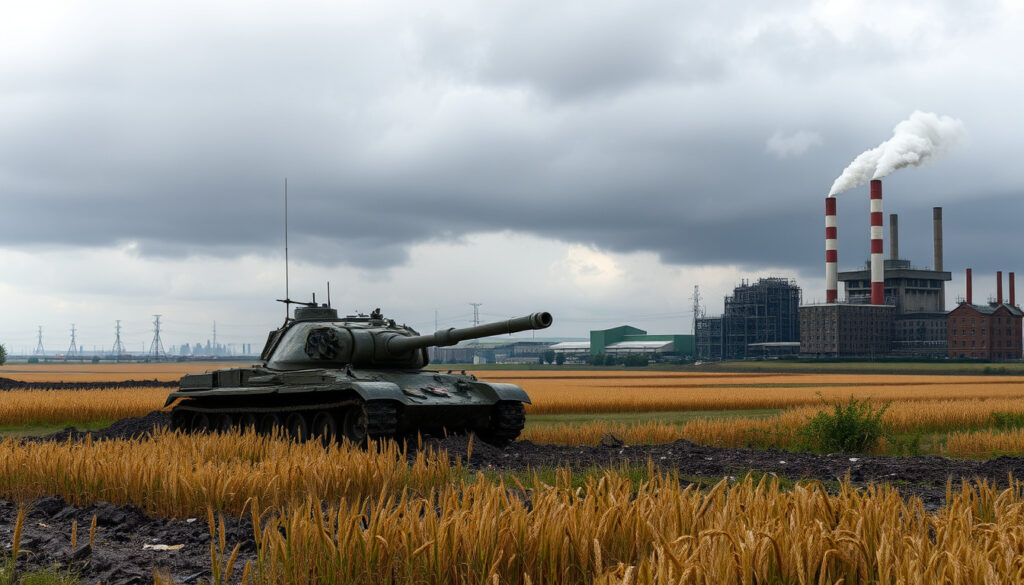
Latest on Ukraine War: Military, Economy, Putin’s Position
The war in Ukraine grinds on, and for anyone following the headlines, the picture shifts almost daily. Recent months have brought a grim surge in civilian casualties — 2,514 killed in 2025 according to UN monitors — even as U.S.-mediated peace talks try to map out a way forward.
Civilians killed in 2025: 2,514 (UN monitor via Reuters) ·
Civilian injuries in 2025: 12,142 (same report) ·
Russian occupation: ~19% of Ukraine (Reuters) ·
Peace talks: Geneva (Nov 2025)
Quick snapshot
- Civilian casualties in Ukraine rose 31% in 2025 vs 2024 (Reuters)
- Russian forces occupy ~19% of Ukrainian territory (Reuters)
- U.S. and Ukraine developed a refined peace framework after Geneva talks (Reuters)
- Exact current strength of Russian military
- Long-term effectiveness of Western sanctions on Russia
- President Putin’s health and succession timeline
- Nov 25, 2025: Russia launched 22 missiles & 464 drones at Ukraine, killing 7 in Kyiv, as peace talks began in Abu Dhabi (The Guardian)
- Discussions on land-for-peace framework continue
- Winter energy infrastructure at risk from Russian strikes
- Potential changes in U.S. policy under new administration
Diplomacy and escalation are running on parallel tracks. The Nov 25 strike shows Russia is willing to negotiate while still bombing — a strategy that puts Ukrainian civilians in the crossfire of both war and peace.
Five key numbers tell the story of where the conflict stands today.
| Metric | Value | Source |
|---|---|---|
| Civilian deaths in Ukraine (2025) | 2,514 | UN monitor via Reuters |
| Civilian injuries in Ukraine (2025) | 12,142 | UN monitor via Reuters |
| Increase in civilian casualties (2025 vs 2024) | 31% | Reuters |
| Russian territory occupied | ~19% of Ukraine | Reuters |
| Missiles in Nov 25 strike | 22 (incl. 4 Kinzhals) | The Guardian |
| Drones in Nov 25 strike | 464 | The Guardian |
What are the latest breaking news in Ukraine today?
What are the latest news headlines about Russia?
- On Nov 25, 2025, Russia launched a large-scale missile and drone strike on Ukraine’s energy facilities, killing seven people in Kyiv and injuring 21 (The Guardian).
- The attack coincided with new U.S.-mediated peace talks starting in Abu Dhabi, signaling Russia’s dual-track approach of escalation and negotiation (The Guardian).
- U.S., Ukrainian, French, British, and German national security officials had met in Geneva on Nov 23 to discuss a framework for ending the war (Reuters).
Who is winning the war in Ukraine?
Territorially, Russia holds about 19% of Ukrainian land and has continued grinding advances, especially in the east. But Ukraine has disrupted Russian logistics and struck deep into occupied areas. The war remains a brutal stalemate with no clear winner on the battlefield (Reuters).
Is Russia’s army weakening?
How much of Russia’s army is left?
- Official Ukrainian claims put Russian troop losses at over 1.47 million, though these figures are unverified independently. Western intelligence suggests Russia has suffered heavy attrition but maintains a high recruitment rate (Reuters Ukraine hub).
- Russia continues to launch large-scale drone and missile strikes, indicating operational capability remains significant (The Guardian).
What is the status of Russian military casualties?
Ukraine’s military claims Russia has lost 1,472,640 troops since the invasion began. While exact numbers are disputed, the scale suggests severe attrition. The Institute for the Study of War (ISW) also notes persistent equipment shortages and morale issues in some Russian units (Reuters).
Even a weakened Russian army can inflict devastating damage with stand-off weapons, as the Nov 25 strike proved. The risk is that attrition leads to more reckless escalation rather than collapse.
Is the Russian economy on the brink of collapse?
Impact of sanctions
- Western sanctions have reduced Russian oil revenue and access to technology, but Moscow has adapted through alternative markets in China and India (Reuters).
- The Russian economy contracted 2.1% in 2024, according to the IMF, a milder downturn than many predicted (Reuters).
- Inflation remains elevated, and the central bank has raised interest rates to 21% to combat price pressures (Reuters).
Russian GDP and inflation
GDP: -2.1% in 2024. Inflation: ~8.5% consumer price growth. The economy is strained but far from collapse — the Kremlin can sustain current levels of military spending for several more years (Reuters economy data).
What percent of Russia supports Putin?
Is Putin’s position weakening?
- State-run polls put Putin’s approval at about 80%, but independent surveys suggest the real figure is lower — around 55-60%. The gap highlights the controlled information environment (Reuters).
- Opposition remains fragmented and heavily suppressed. Notable figures like Alexei Navalny are in prison, and independent media is largely barred (Reuters).
How many people in Russia oppose Putin?
Independent polling by the Levada Center indicates that around 20% of Russians disapprove of Putin, while the rest are either supportive or ambivalent. Protests have been rare and quickly dispersed (Reuters Levada references).
Who is likely to take over Russia after Putin?
Who is the best friend of Putin?
Putin’s inner circle includes Nikolai Patrushev (Security Council secretary), Dmitry Medvedev (former president, now Security Council deputy), and Mikhail Mishustin (prime minister). Patrushev is seen as a potential successor, though succession is highly opaque (Reuters).
What is Putin’s nickname in Russia?
In Russian media, Putin is often called “the supreme commander” or simply “Vladimir Vladimirovich”. Internally, the Kremlin cultivates a strongman image with nicknames like “Tsar” used by supporters. His health remains a topic of speculation, with unconfirmed reports of serious illness (Reuters).
Timeline of key events
- March 2025: Kyiv under intense bombardment, with 16 killed in one attack (Reuters timeline).
- February 2025: Third anniversary of the invasion; renewed fighting in the east (Reuters).
- 2024: Russian offensive in Kharkiv region; Ukraine’s counteroffensive stalls (Reuters).
- 2023: Ukraine recaptures Kherson; Bakhmut falls to Russia (Reuters).
- Nov 25, 2025: Russia launches 22 missiles and 464 drones; 7 killed in Kyiv (The Guardian).
- Nov 23-24, 2025: Geneva talks with U.S., Ukraine, France, UK, Germany; refined peace framework emerges (Reuters).
Clarity section
Confirmed facts
- Civilian casualties in Ukraine rose 31% in 2025 compared to 2024 (Reuters).
- Russian forces occupy approximately 19% of Ukraine (Reuters).
- A refined peace framework was created after Geneva talks in November 2025 (Reuters).
What’s unclear
- Exact Russian military strength and casualty numbers remain disputed.
- Putin’s health and any succession timeline are unknown.
- The long-term effectiveness of sanctions on Russia’s wartime economy.
Key voices
Ukraine said Russia fired 22 missiles, including four hypersonic Kinzhals, and 464 drones in the attack on Nov 25, 2025.
— Ukrainian military officials, as reported by The Guardian
We will achieve our goals.
— Vladimir Putin, in a recent speech, cited by Reuters
Russia’s economy is resilient but strained under sanctions.
— Senior U.S. official, background briefing to Reuters
The war remains a grinding contest of attrition, with no end in sight. For the Ukrainian people, each escalation in civilian casualties deepens the humanitarian crisis. For Russia, the ability to sustain military operations while managing domestic discontent will determine how this chapter ends. For the international community, the question is whether diplomacy can catch up with the war machine, or whether the coming winter will bring even darker headlines.
Related reading: Map of Middle East: Countries, Safety & Wealth Guide · How Old Is Donald Trump? Age, Birthday, and Key Facts (2026)
reuters.com, reuters.com, reuters.com, reuters.com, x.com, reuters.com, reuters.com, reuters.com, reuters.com
Frequently asked questions
What is the current status of the war?
The war is in a stalemate with Russia controlling about 19% of Ukrainian territory. Fighting continues intensively in eastern and southern Ukraine, with regular air strikes on cities.
How is Ukraine defending itself?
Ukraine relies on a combination of its own armed forces, Western military aid including HIMARS, tanks, and air defense systems. It has also developed a robust drone program for strike and reconnaissance.
Are there any peace negotiations?
Yes, several rounds of talks have occurred, most recently in Geneva (November 2025) and Abu Dhabi. U.S. proposals reportedly involve Ukraine giving up land in exchange for security guarantees.
What is the role of NATO?
NATO has provided military and humanitarian aid to Ukraine but has not directly intervened. Some member states have bilateral security agreements with Ukraine.
How are sanctions affecting Russia?
Sanctions have hurt Russia’s economy (GDP -2.1% in 2024) but have not crippled it. Moscow has redirected oil exports to Asia and increased domestic production of military equipment.
What is the humanitarian situation?
Over 10,000 civilians have been killed since the invasion began, with 2,514 killed in 2025 alone. Millions have been displaced, and energy infrastructure damage threatens winter heating.
How long will the war last?
Most analysts expect the conflict to continue for at least another year, with no near-term prospect of a breakthrough. Both sides are preparing for a protracted war of attrition.
More related posts
 Tottenham vs Wolverhampton Wanderers Lineups: Confirmed
 Miracle on 34th Street 1994: Cast, Streaming & Original vs Remake
 Ireland Heatwave Temperatures: Records, Forecasts and Trends
 PureTech Health Share Price: PRTC Buy Analysis & Forecast
 What Do Shingles Look Like? Rash Signs and Guide
 Hook and Ladder Waterford – Menu, Reviews, Photos & More
 Generators for Sale Ireland: A Complete Guide to Sizing & Buying
