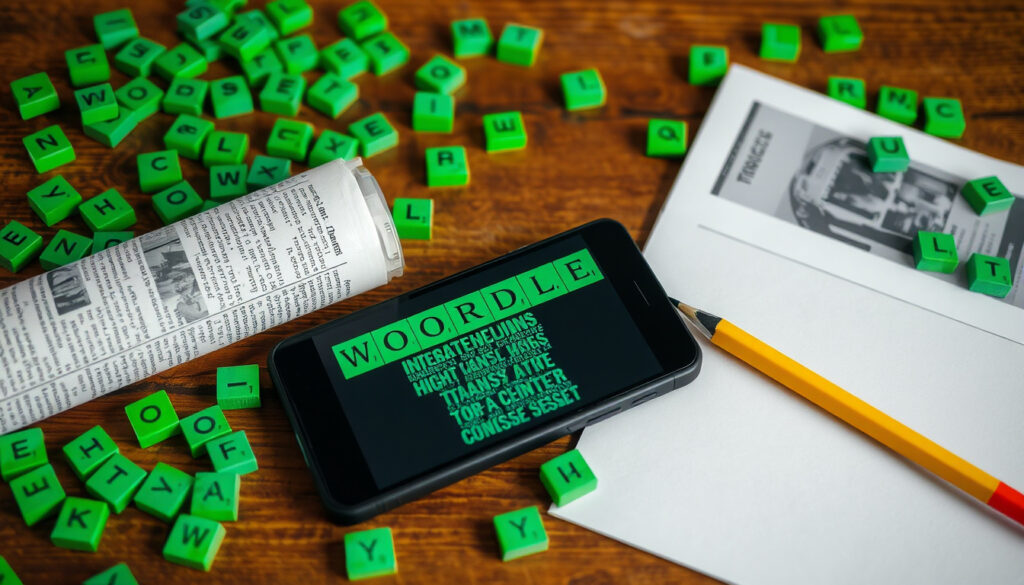
Wordle — The New York Times: How to Play, Hints, and More
Few daily rituals have taken over morning routines quite like Wordle. What started as a small puzzle built by a Brooklyn software engineer has become a global habit—and since January 2022, it’s been part of The New York Times puzzle family. Whether you’re a daily solver or just curious about the hype, this guide walks through how to play, where to find hints, and how Wordle fits into the larger universe of NYT games.
Daily puzzles: 1 ·
Maximum guesses per puzzle: 6 ·
Word length: 5 letters ·
Year acquired by NYT: 2022 ·
Available platforms: Web, iOS, Android
Quick snapshot
- Wordle is a free daily word game with six guesses per puzzle (The New York Times Help Center (official support))
- NYT acquired Wordle in January 2022 (The New York Times (official publisher))
- Green = correct letter in correct spot; yellow = correct letter wrong spot; gray = not in word (The New York Times)
- Whether NYT will add more puzzle games in the future
- Details about future monetization changes
- New Wordle puzzle daily at midnight local time (The New York Times Help Center)
- Tom’s Guide continues to publish daily Wordle hints (Tom’s Guide (tech and lifestyle editorial))
- Players can continue enjoying Wordle free with optional NYT Games subscription for extras
- Independent spin-offs like Quordle and Waffle provide alternative daily word puzzles
Five key facts summarize the game’s profile:
| Attribute | Detail |
|---|---|
| Creator | Josh Wardle |
| Acquisition | The New York Times, January 2022 |
| Platform | Web, iOS, Android |
| Daily puzzles | 1 |
| Subscription required? | No – free to play, optional NYT Games subscription for extras |
What is Wordle?
Wordle is a word-guessing game where players have six attempts to find a five-letter word. It was reportedly created by software engineer Josh Wardle in 2021, according to Tom’s Guide (tech and lifestyle publication). The puzzle became a viral sensation and was acquired by The New York Times in January 2022 (The New York Times).
The origin of Wordle
- Josh Wardle, a former Reddit engineer, built the game for his partner during the pandemic.
- The game originally had no ads or monetization; it spread via shared emoji grids.
The implication: What began as a personal project turned into a cultural phenomenon so powerful that the country’s most prestigious newspaper publisher acquired it within months.
Why the NYT acquired Wordle
The acquisition gave The New York Times an instantly engaged daily audience. The NYT paid a reported low-seven-figure sum for the game, adding it to its growing digital puzzle portfolio (The New York Times).
The upshot For a publisher trying to convert casual web visitors into subscribers, Wordle was the perfect daily hook—no login required, but a built-in reason to return every morning.
How Wordle became a daily habit
The one-puzzle-per-day limit creates anticipation. Players share results on social media without revealing the answer. According to Tom’s Guide (tech and lifestyle outlet), millions of people check the site daily. The pattern: scarcity (one puzzle) drives loyalty.
Bottom line: Wordle is a free, daily five-letter puzzle that became a global habit because of its simple rules and social sharing. Casual players get a quick brain warmup; dedicated fans get a community ritual. The key trade-off: one puzzle a day keeps the addiction manageable.
How to Play Wordle on The New York Times
The New York Times offers Wordle through its website and apps. The official NYT Help Center (official support) outlines the steps:
- Visit nytimes.com/games/wordle or open the NYT Games app on iOS or Android.
- Each guess must be a valid five-letter word. Type the letters and press Enter.
- After each guess, the tiles change color: green means the letter is correct and in the right spot; yellow means it’s in the word but in the wrong spot; gray means the letter is not in the word at all (The New York Times).
- You get six guesses. If you guess the word within that number, you win. If you run out, the answer is revealed and you lose.
- A new puzzle is published at midnight local time every day (The New York Times Help Center).
The catch The all-white row means your guess wasn’t entered yet or the word wasn’t accepted. Make sure you’ve typed a real five-letter word before pressing Enter.
What Other Games Does NYT Offer?
Beyond Wordle, The New York Times publishes several other daily puzzles that appeal to word-game lovers. Six games, one family: each challenges a different cognitive skill.
| Game | Type | Daily puzzle | Free to play |
|---|---|---|---|
| Wordle | Word guessing | Yes | Yes (free) |
| Connections | Categorization | Yes | Yes (free) |
| Spelling Bee | Word construction | Yes | Yes (free basic; subscription for more puzzles) |
| Quordle | Multi-word guessing (independent) | Yes | Yes |
| Waffle | Letter swapping grid (independent) | Yes | Yes |
The pattern: NYT’s first-party games remain free and ad-supported, while independent alternatives like Quordle and Waffle offer variations with different time commitments.
Connections
- Players are given 16 words and must sort them into four groups of four, each sharing a common theme.
- One free mistake is allowed per game.
- The official game is available at NYT Connections (official site).
The editorial takeaway: Connections requires lateral thinking—groups might be based on synonymy, cultural references, or wordplay. It’s a different kind of daily brain workout than Wordle’s logic test.
Spelling Bee
- Seven letters are given, one of which must be used in every word.
- Players must form words of at least four letters. Longer words earn more points.
- A free daily puzzle is available; a Games subscription unlocks additional puzzles and stats.
Why this matters: Spelling Bee rewards vocabulary depth rather than process-of-elimination logic, making it a complement to Wordle’s deductive approach.
How to Get Wordle Hints
If you’re stuck on today’s puzzle, several resources can help without spoiling the answer.
- The NYT Wordle Review column publishes daily commentary and hints, often including the starting letter or letter count (The New York Times (official puzzle coverage)).
- Third-party sites like NYTGameHint (fan-made hint site) offer layered clues—general meaning, vowel count, repeated letters, and a reveal button for those who want the answer.
- Tom’s Guide provides a daily Wordle hints-and-answer page that includes context clues (Tom’s Guide (tech and lifestyle)).
The trade-off: Official NYT hints are subtle and designed to preserve the puzzle experience. Third-party sites go further, offering direct reveals. Choose based on how much help you want.
Connections, Spelling Bee, and the NYT Puzzle Ecosystem
These three games—Wordle, Connections, Spelling Bee—form the core of NYT’s daily puzzle lineup. Each targets a different cognitive skill, and together they encourage a daily visit to the Times’ Games hub.
How they complement each other
- Wordle sharpens deductive logic using process of elimination.
- Connections exercises pattern recognition and cultural knowledge.
- Spelling Bee builds vocabulary and word-building speed.
The implication: By offering a trio of puzzle types, NYT ensures there’s something for every type of word-game fan. Players who finish Wordle in three minutes can then spend 15 minutes on a tough Spelling Bee.
What does this mean for the average player? The morning ritual that started with Wordle now has companions. The pattern is clear: NYT is building a habit‑forming puzzle empire, one five‑letter word at a time. For daily solvers, the choice is simple: stick with Wordle alone, or explore the full suite. For The New York Times, the goal is equally straightforward—keep millions of people coming back every day, and turn free players into subscribers over time.
help.nytimes.com, wordlehints.co.uk, lifehacker.com, lifehacker.com, lifehacker.com, lifehacker.com, youtube.com, lifehacker.com
Frequently asked questions
How do I play Wordle?
Go to the NYT Wordle page or app, type a five-letter word, press Enter, and use the color clues to guess the hidden word in six tries. NYT Help Center
Is Wordle free on The New York Times?
Yes, the daily Wordle puzzle is free to play on the web and in the NYT Games app. An optional subscription unlocks extras for other games. NYT Help Center
How often does a new Wordle puzzle come out?
A new puzzle is published every day at midnight local time. NYT Help Center
What do the colors mean in Wordle?
Green means the letter is correct and in the right position; yellow means the letter is in the word but in the wrong position; gray means the letter is not in the word. The New York Times
Can I play previous Wordle puzzles?
Not through the official NYT interface—you can only play the current daily puzzle. Third-party archives exist, but they’re not endorsed by NYT.
What is the Connections game?
Connections is a daily puzzle where you sort 16 words into four groups of four that share a common theme. It’s free at NYT Connections.
How is Spelling Bee different from Wordle?
Spelling Bee asks you to create as many words as possible from a set of seven letters (one must be used in every word). Wordle requires guessing a single five-letter word. Spelling Bee rewards vocabulary breadth; Wordle rewards deduction.
Do I need a subscription for all NYT games?
No. Wordle and Connections are fully free. Spelling Bee offers a free daily puzzle; a subscription unlocks extra puzzles, stats, and ad-free play. Other games like the Crossword require a subscription. NYT Help Center
More related posts
 Hidden Assets Season 3: Release Date, Cast & Where to Watch
 When Does Love Island Start 2025? UK Premiere Date
 Power Book II: Ghost Canceled After 4 Seasons – No Season 5
 Bank of Ireland Share Chat – Price, News and Investor Forums
 Ireland to Scotland Ferry: Routes, Prices, Timetables & Tips
 Farm for Sale Cork – Current Listings Prices Guide
 Cherry Cola Hair Color Guide: Best Shades for Every Skin Tone
 Best TV Shows 2025 – Top Rated Series So Far
