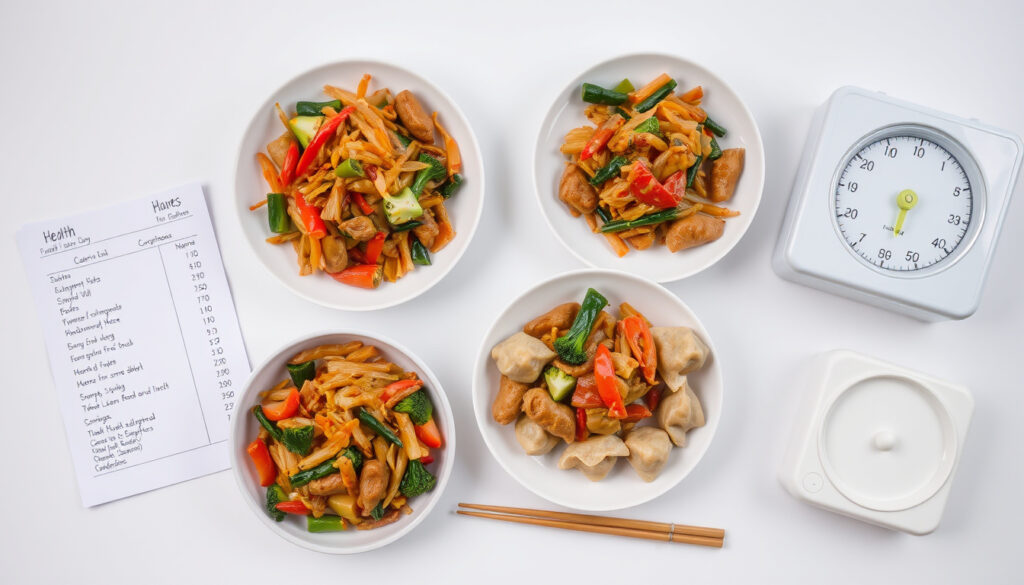
4 in 1 Chinese: Calories, Ingredients & Health Guide
Friday night in Ireland often calls for a visit to the local Chinese takeaway, and the 4‑in‑1 – a hefty combination of rice, chips, curry sauce, and chicken balls – has become a staple of comfort food. We explore the calories, ingredients, and healthier choices for those who love this Irish takeaway classic but want to watch their waistline.
Typical components of a 4‑in‑1: egg fried rice, chips, curry sauce, chicken balls ·
Average calorie range: 1,200–1,500 kcal ·
Average price in Ireland: €4.50–€7.00 ·
Origin: Irish Chinese takeaway adaptations ·
Comparable dish: 3‑in‑1 (rice, chips, curry sauce)
Quick snapshot
- A 4‑in‑1 contains rice, chips, curry sauce, and chicken balls (Wikipedia – 3‑in‑1 dish description)
- It is a menu item unique to Irish Chinese takeaways (Wikipedia)
- Average price range €4.50–€7.00 (The Irish Times – takeaway calorie warning)
- Exact calorie count varies significantly by restaurant and portion size (Irish Independent – takeaway fat warning)
- No standardised recipe exists across all outlets (Food Safety Authority of Ireland – healthy eating advice)
- The 4‑in‑1 evolved from the 3‑in‑1, which has been documented in Irish media since at least 2000 (The Irish Times – 2000 calorie warning)
- Growing health awareness may drive demand for lower‑calorie versions (The Irish Times – 2000 calorie warning)
- Health authorities like Healthy Ireland (government food plans and guides) continue to promote portion control and healthier choices in takeaways
- More consumers in Ireland are seeking nutritional information before ordering (Food Safety Authority of Ireland)
Four key facts about the 4‑in‑1, from caloric load to origin.
| Fact | Details |
|---|---|
| Average calories per serving | 1,200–1,500 kcal |
| Core components | Egg fried rice, chips, curry sauce, chicken balls |
| Common price range | €4.50–€7.00 |
| Origin country | Ireland (adapted from Chinese takeaways) |
What is a 4in1?
Components of a 4‑in‑1
- Egg fried rice – typically the base carbohydrate, accounting for a large share of the meal’s weight (Irish Independent – takeaway portion sizes)
- Chips – a second starch, making the dish exceptionally carb‑dense
- Curry sauce – a thick, often mildly spiced gravy that binds the components
- Chicken balls – battered and deep‑fried chunks of chicken, the primary protein (The Irish Times – Safefood research)
How it differs from a 3‑in‑1 and a 2‑in‑1
- A 3‑in‑1 consists of rice, chips, and curry sauce – no chicken balls (Wikipedia – 3‑in‑1 dish)
- A 2‑in‑1 usually combines chips or rice with curry sauce only – the simplest and lowest‑calorie variant
- The 4‑in‑1 adds battered protein, which increases both calories and fat content significantly
Why it is popular in Ireland
Irish Chinese takeaways have long catered to local tastes by offering hearty, affordable combinations. According to Healthy Ireland (government food guides), these meals are designed for value and convenience, and the 4‑in‑1 fits that brief perfectly. It delivers a full plate of comfort food for under €7, which is hard to beat.
The 4‑in‑1 occupies a distinct niche in Irish food culture, balancing indulgence with convenience.
How many calories are in a Chinese 4‑in‑1 takeaway?
Estimated calorie breakdown by component
A typical 4‑in‑1 falls in the range of 1,200–1,500 kcal based on average portion sizes observed in Irish takeaways. The Safefood research reported by The Irish Times found that an egg fried rice portion alone averaged 727 kcal. Adding chips (roughly 400–500 kcal), curry sauce (150–250 kcal), and chicken balls (300–400 kcal) quickly adds up.
Comparison to 3‑in‑1 and 2‑in‑1 calories
- 3‑in‑1 (rice, chips, curry sauce): estimated 1,100–1,200 kcal – no protein component, so lower.
- 2‑in‑1 (chips + curry sauce or rice + curry sauce): typically 700–900 kcal.
- The chicken balls in a 4‑in‑1 add an extra 200–300 kcal compared to a 3‑in‑1, along with significant fat (Irish Independent – fat warning).
Factors that affect the total
Portion size varies widely – the Irish Independent noted that some rice portions weighed 359 grams, enough for two adults. Frying method, oil absorption, and the amount of sauce all influence the final calorie count. GAA healthy eating guidance warns that most takeaway foods are very high in fat, salt, and calories.
A single 4‑in‑1 can supply more than half the daily calorie needs for an average adult, and most of that comes from refined carbs and deep‑fried protein – not a balanced meal.
The implication: for anyone eating a 4‑in‑1, the total calorie load is driven as much by the double‑carb base as by the chicken balls. Choosing one starch over two is the single biggest lever for cutting calories.
Is Chinese chicken curry unhealthy?
Nutritional profile of chicken curry from a takeaway
Chinese chicken curry from a takeaway is typically made with batter‑fried chicken pieces in a sauce that can be high in fat, sugar, and salt. Safefood research found that sweet and sour chicken (a similar battered dish) contained 1,106 kcal and 41 grams of fat per portion – the highest energy and fat content of any sampled item.
Saturated fat and sodium concerns
- The same Safefood study reported that a typical Chinese takeaway meal (spring rolls, sweet and sour chicken, egg fried rice) contained 10 grams of salt – more than the recommended daily maximum.
- Food Safety Authority of Ireland (consumer advice) states that Healthy Ireland and Safefood provide healthy eating advice, which includes limiting salt from takeaways.
- Battered chicken absorbs oil during frying, increasing saturated fat content.
How to make a healthier choice
- Choose steamed or stir‑fried chicken without batter, such as chicken chow mein (Consumers’ Association of Ireland takeaway guide).
- Ask for sauce on the side to control how much you consume.
- Replace egg fried rice with boiled or steamed rice – the Consumers’ Association of Ireland advises this swap.
Chinese chicken curry is one of the least healthy options, but you can cut the calorie and salt load significantly by choosing unbattered chicken, skipping the rice, or using half the sauce.
The trade-off: flavour and texture are often tied to the frying process, so lighter versions may taste different. For regular takeaway eaters, the long‑term health impact of high sodium and saturated fat warrants a rethink.
What is the healthiest Chinese takeaway in Ireland?
Low‑calorie items on the menu
- Chicken and sweetcorn soup – the Consumers’ Association of Ireland notes it is usually low in fat.
- Steamed rice – avoids the oil and calories of fried rice.
- Vegetable spring rolls (steamed or baked if available) instead of deep‑fried versions.
- Chicken chow mein – stir‑fried noodles with chicken and vegetables, lighter than battered dishes.
Healthiest chicken dish at a Chinese restaurant
According to takeaway advice from the Consumers’ Association of Ireland, dishes that are steamed, stir‑fried, or broth‑based are the best picks. Chicken senza pelle (without skin) in a lighter sauce, like steamed chicken with ginger and spring onion, is common in Irish Chinese takeaways and can be under 400 kcal per serving.
Tips for ordering a balanced takeaway
- Skip starters like spring rolls and prawn crackers – Safefood found prawn crackers alone average 608 kcal.
- Replace the 4‑in‑1 with a 3‑in‑1 and add a side of steamed vegetables to increase fibre.
- Share a portion – the Irish Independent noted that a single rice portion is often enough for two.
Adopting these strategies allows for occasional enjoyment of takeaways without significant dietary compromise.
What is a 2 in 1 Chinese?
Definition of a 2‑in‑1
A 2‑in‑1 is the simplest variant in the “n‑in‑1” family: it contains chips or rice (or sometimes both in a smaller portion) with curry sauce, but no additional protein. It is often the cheapest item on the menu.
How it relates to 3‑in‑1 and 4‑in‑1
- 2‑in‑1: carbs + sauce – estimated 700–900 kcal, price typically €3–€5.
- 3‑in‑1: rice + chips + curry sauce – 1,100–1,200 kcal, price €4–€6.
- 4‑in‑1: rice + chips + curry sauce + chicken balls – 1,200–1,500 kcal, price €4.50–€7.
Calorie and price differences
The 2‑in‑1 has the lowest calorie count because it lacks both the extra starch of a 3‑in‑1 and the protein of a 4‑in‑1. Price scales linearly with components. For health‑conscious customers, the 2‑in‑1 offers a lighter option, though it still packs a significant carb load.
“A 2‑in‑1 is basically chips and curry sauce – it’s the cheapest way to get your fix, but you’re just eating carbs.”
– Reddit user on r/ireland, cited in Reddit discussion on Irish takeaway variants
The pattern: each additional “in‑1” adds roughly 200–400 kcal, with the chicken ball addition being the most significant jump.
Comparison: 2‑in‑1 vs 3‑in‑1 vs 4‑in‑1
Three variants, one pattern: more components mean more calories, but also more satiety and variety.
| Variant | Components | Estimated Calories | Typical Price (Ireland) |
|---|---|---|---|
| 2‑in‑1 | Chips or rice + curry sauce | 700–900 kcal | €3–€5 |
| 3‑in‑1 | Rice + chips + curry sauce | 1,100–1,200 kcal | €4–€6 |
| 4‑in‑1 | Rice + chips + curry sauce + chicken balls | 1,200–1,500 kcal | €4.50–€7 |
Pros and cons of the 4‑in‑1
Upsides
- Filling and satisfying – a complete meal in one box
- Good value for money – typically under €6
- Widely available across Irish Chinese takeaways
- Can be customised (e.g., swap rice for noodles, choose different protein)
Downsides
- Very high calorie density – easily exceeds 1,200 kcal
- High in salt and saturated fat – often exceeds daily limits (Safefood research via The Irish Times)
- Double starch (rice + chips) pushes carbohydrate load high
- Limited nutritional diversity – lacks vegetables and fibre
Ultimately, the choice depends on individual dietary priorities and health goals.
What we know vs what remains unclear
Confirmed facts
- A 4‑in‑1 contains rice, chips, curry sauce, and chicken balls (Wikipedia)
- It is a menu item unique to Irish Chinese takeaways
- The average calorie range is 1,200–1,500 kcal
What remains unclear
- Exact calorie count varies significantly by restaurant and portion size
- No standardised recipe exists across all outlets (FSAI)
- The specific nutritional content of individual components (e.g., curry sauce recipe) is not publicly available
- Whether portion sizes are always large enough for two adults depends on the specific takeaway
Understanding these gaps in knowledge helps consumers make more informed decisions.
“The 4‑in‑1 is essentially the same as a 3‑in‑1 but with chicken balls thrown in – it’s the Irish way of making a takeaway more ‘substantial’.”
– Wikipedia entry for 3‑in‑1 (fast food dish)
“I remember getting a 4‑in‑1 for €4.50 back in 2019 – rice, chips, curry sauce, and chicken balls. It was huge.”
– Reddit user, r/ireland (discussion thread)
Making sense of the 4‑in‑1
The 4‑in‑1 is a cultural phenomenon that satisfies a craving for hearty, affordable comfort food. But for anyone in Ireland who orders it regularly, the calorie and salt burden is real. The trade-off is clear: you get convenience and taste, but you pay for it with nutritional imbalance. For the health‑conscious takeaway fan, the best move is either to downsize to a 3‑in‑1 with a side of vegetables, or to share a 4‑in‑1 with a friend and skip the chips.
Frequently asked questions
What is a 3‑in‑1 Chinese takeaway?
A 3‑in‑1 combines rice, chips, and curry sauce – it is the immediate predecessor of the 4‑in‑1 and lacks the chicken balls. It is slightly lower in calories, typically around 1,100–1,200 kcal.
How many calories are in a single chicken ball?
A typical battered chicken ball (about 30–40 g) contains approximately 80–120 kcal. A serving of 4–5 balls can add 300–400 kcal to a takeaway.
Can I order a 4‑in‑1 without chips?
Yes, many Irish takeaways will substitute extra rice or noodles for chips if you ask. This can reduce the calorie count by roughly 400–500 kcal.
Is the curry sauce in a 4‑in‑1 vegetarian?
Most Chinese takeaway curry sauces in Ireland are made with vegetable stock and spices, but some may contain meat or fish‑based flavourings. It is best to ask your takeaway directly.
What is the lowest‑calorie side dish from a Chinese takeaway?
Steamed rice, boiled noodles, or a small portion of mixed vegetables are the lowest‑calorie sides. Avoid spring rolls, prawn crackers, and anything marked “crispy” or “battered”.
Where did the name ‘4‑in‑1’ come from?
The name likely originated in Irish Chinese takeaways to advertise a combination meal that included four components (rice, chips, curry sauce, chicken balls) in one box. It follows the pattern of the 3‑in‑1, which itself became popular in the 1990s and early 2000s.
More related posts
 Sligo to Galway Bus: Timetable, Prices and Operators
 Ireland vs Hungary Tickets – Availability and Buying Guide
 Clube de Regatas do Flamengo: History, Sports & Tickets
 Christmas Gifts for Men in Ireland: Top Picks & Rules
 Trouser Suits for Women: Wedding & Special Occasion Guide
 Birthday Present Ideas for Her: Unique, Inexpensive & Last-Minute
 Wolves v Man Utd 4-1: TV Channel, Score, News & Recap
 Sky Broadband Ireland Phone Number: Official Support 2025
