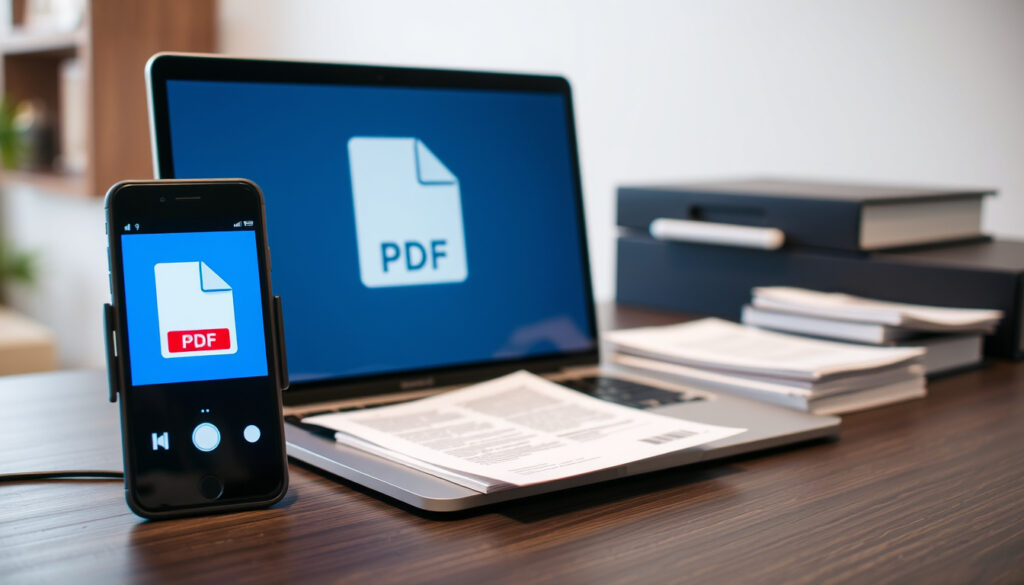
How to Scan Documents to PDF: Free Methods for All Devices
Turning a paper document into a PDF shouldn’t feel like a scavenger hunt for the right software. Most phones, computers, and printers already have free tools built in—Apple’s Notes app on iPhone can scan and export a PDF in seconds (Apple Support), and Android’s Google Drive includes a scanner with no extra download. This guide covers every method, from mobile apps to desktop printers, so you can pick the one that works for you.
Methods covered in this guide: 5 (phone, computer, printer, online, email) ·
Free tools available: Google Drive, Adobe Scan, Microsoft Scan Document to PDF ·
Platforms supported: Android, iOS, Windows, macOS, web
Quick snapshot
- Adobe Scan free with OCR (Adobe Acrobat)
- Apple Notes scan to PDF (Apple Support)
- Genius Scan exports multi-scan PDFs (Google Play)
- Windows Fax and Scan — built-in free tool (Adobe Acrobat Help)
- Mac Preview scan to PDF (Adobe Acrobat Help)
- Adobe Acrobat desktop scanning (Adobe Acrobat Help)
- Use printer’s control panel
- Set destination to email or computer
- Requires driver installation
- No app installation needed
- Upload photo/scan via browser
- Free with file size limits
Five free tools, one common pattern: the best solution is often the one already on your device.
| Tool | Platform | Cost | Key feature |
|---|---|---|---|
| Google Drive Scanner | Android, iOS | Free | Built-in, no extra app |
| Adobe Scan | Android, iOS | Free | AI edge detection, OCR (Adobe Acrobat) |
| Microsoft Scan Document to PDF | Windows 10/11 | Free | Microsoft Store app |
| macOS Preview | macOS | Free | File > Import from Scanner |
| Printer manufacturer software | Windows, macOS | Often free | Scan to PDF via driver |
The implication: you don’t need to buy software to scan documents to PDF — every major platform offers a free path.
How can I scan a document and save it as a PDF?
The core process is straightforward: place the document on a flat surface, open a scanner app or tool, capture the image, and save it as a PDF. The exact steps vary by device, but the underlying logic is the same.
The pattern across all platforms is identical: capture, crop, save. The device you already own likely has the tool built in — no purchase necessary.
How to scan documents to PDF on Android
Android users have two excellent free options built right in. Google Drive’s app includes a scanner — tap the + button, then Scan. It automatically detects edges and enhances the image. The result saves directly to your Drive as a PDF. No extra app needed.
Alternatively, download Adobe Scan from Google Play (Google Play). It’s free and offers OCR (optical character recognition) to make your PDFs searchable. The app also has automatic edge detection and can combine multiple pages into one document.
Another reliable option is Genius Scan, also free on Google Play (Google Play). It exports multi-page PDFs and supports batch scanning.
Android users have three free, high-quality scanners — Google Drive, Adobe Scan, and Genius Scan — all with automatic edge detection and PDF export. No subscription required.
How to scan documents to PDF on computer
On Windows 10 and 11, the built-in Windows Fax and Scan tool works with most scanners. Open it, click New Scan, choose your scanner, select PDF as the file type, and save. For a more modern app, install Microsoft Scan Document to PDF from the Microsoft Store — it’s free and designed for touch-friendly use.
On macOS, open Preview, go to File > Import from Scanner, select your device, and scan. The PDF opens automatically and can be saved. This is a built-in feature, no extra software needed.
For advanced features like OCR and batch processing, Adobe Acrobat (paid) offers desktop scanning, but the free tools above cover most needs.
How to scan papers into a PDF on printer
Most multi-function printers have a scan-to-PDF feature. Use the printer’s control panel to select Scan → To PDF → choose a destination (USB, email, or computer). Some printers require manufacturer software to be installed on your computer for the PDF option to appear.
If your printer’s software doesn’t offer PDF directly, scan to JPEG or TIFF first, then convert using a free online tool like Smallpdf or iLovePDF (with file size limits).
The catch: many older HP printers used Flash-based software that no longer works on modern browsers, as a Reddit user on r/pdf noted: “The software on my old HP scanner was Flash based. Now that I upgraded computers, I can’t install the old software and there is no update.” In that case, use the printer’s basic scan function via Windows Fax and Scan or a third-party app.
If your printer’s scanning software depends on Flash, you need a replacement now. Switch to a free third-party app like NAPS2 — it supports most TWAIN-compatible scanners and doesn’t require browser plugins.
How do I scan a document as a PDF on my iPhone?
iPhone users have several built-in methods that don’t require any additional apps. The most straightforward is through the Notes app.
Using the Notes app to scan directly to PDF
Open Notes, create a new note, tap the camera icon, and choose Scan Documents. Position the document in the frame — the camera auto-captures when the page is level (Macworld). You can adjust corners if needed. Tap Save to add the scan to the note. To export as a PDF, tap the scan, then the share button, and choose Save to Files — it saves as a PDF file.
Using the Files app to scan directly to PDF
On iOS 13 and later, the Files app has a built-in scanner. Open Files, navigate to a folder, tap the … menu, and select Scan Documents. Capture the pages, tap Save, and the scans are saved as PDFs in that folder. No extra steps needed.
Using Adobe Scan on iPhone
Adobe Scan is available free on the App Store. It’s Wirecutter’s top pick for mobile scanning apps (Wirecutter). The app uses AI to detect edges, enhance text, and offers OCR for searchable PDFs. You can scan multiple pages, reorder them, and share directly via email or cloud storage.
iPhone users can scan a document to PDF in under 30 seconds using Notes or Files — no app download, no account, no cost. For occasional scanning, that’s the fastest path.
Can I scan a document to PDF and email it?
Yes, and it’s easy from any device. Most scanner apps include a share or send option that attaches the PDF to your email client directly.
How to scan and email from a smartphone
After scanning in Adobe Scan, Google Drive, or Notes, tap the Share icon. Choose Mail (or your email app). The PDF attaches automatically. Add a subject and recipient, then send. No need to save the file first.
How to scan and email from a computer
On Windows, use Windows Fax and Scan to scan to PDF, then save the file. Open your email client, compose a new message, and attach the PDF. On macOS, the same workflow applies: scan with Preview, save, then attach.
How to scan and email from a printer
Some printers support direct email scanning. On the printer’s control panel, select Scan to Email. Enter the recipient’s email address (if the printer has a touchscreen) or configure the email feature in the printer’s software. The printer sends the PDF directly — no computer needed.
For printers without email capability, scan to a USB drive or computer first, then email as described above.
The pattern: every path ends with a Share or Send button. The email integration is already there — you just tap it.
Is there a free way to scan to PDF?
Absolutely. Free tools exist on every platform. The table below summarizes the best options.
| Tool | Platform | Limitations |
|---|---|---|
| Google Drive | Android, iOS | Requires Google account |
| Adobe Scan | Android, iOS | Free tier is clean, no watermark (Adobe Acrobat) |
| Windows Fax and Scan | Windows | Basic, no OCR |
| macOS Preview | macOS | Basic, no OCR |
| Smallpdf / iLovePDF | Web | File size limits (2-5 pages free) |
The trade-off: free tools are often limited to basic scanning without OCR or batch processing. For most occasional users, they’re more than enough.
Free mobile scanner apps
Besides Adobe Scan and Genius Scan, CamScanner offers a free version with ads, but its privacy practices have been questioned. Stick with the trusted names: Adobe Scan (free, no ads) and Google Drive (free, no ads).
Free online PDF scanners
Websites like Smallpdf and iLovePDF let you upload a photo of your document and convert it to PDF. Both are free for small files (up to 2-5 pages). For larger documents, you’ll need to upgrade or use a mobile app.
Built-in OS scanning tools
Windows Fax and Scan and macOS Preview are both free, built-in, and require no internet connection. They work with any scanner that has drivers installed. No subscription, no account.
Why can’t I save a scanned document as a PDF?
If you’re hitting a wall, the issue is almost always software, not hardware. Here are the most common culprits and how to fix them.
Common software and driver issues
- Flash-based scanner software: Older HP and Canon printers used Flash-based tools that no longer work in modern browsers. Solution: use the printer’s built-in scan function via Windows Fax and Scan or a third-party app like NAPS2.
- Missing PDF printer driver: Some scanner software requires a virtual PDF printer. Install Microsoft Print to PDF (built into Windows 10/11) or a free tool like PDFCreator.
- Outdated drivers: Visit your printer manufacturer’s website and download the latest drivers for your OS version.
File permission problems
If you’re scanning in a work or school environment, network permissions may prevent saving to certain folders. Try saving to your desktop or Documents folder instead.
Incorrect file format settings
Some scanner software defaults to JPEG or TIFF. Look for a Save as type dropdown and select PDF. If the option is missing, the software may not support PDF output — use a different app.
The pattern: outdated drivers and abandoned software cause most failures. Free third-party apps like NAPS2 bypass both problems.
Pros and Cons of Free Scanning Methods
Upsides
- No cost for basic scanning on all platforms
- Built-in tools on Windows, Mac, iPhone, Android
- Adobe Scan and Google Drive are ad-free
- OCR available in free apps (Adobe Scan)
- Cloud integration for easy sharing
Downsides
- Free online tools have file size limits
- No batch OCR in free desktop tools
- Printer manufacturer software may be outdated
- Some free apps require account creation
- Multi-page scanning may be slower on free tier
Confirmed facts vs. What’s unclear
Confirmed facts
- Google Drive scan feature works on Android and iOS (free)
- Adobe Scan is free for basic scanning and OCR (Adobe Acrobat)
- Windows Fax and Scan is included in Windows 10/11
- Apple Notes and Files can scan to PDF on iPhone (Apple Support)
- Wirecutter recommends Adobe Scan as the best free mobile scanning app (Wirecutter)
What’s unclear
- Why some HP scanner software fails after Flash deprecation — no official fix from HP
- Effectiveness of free online scanners for multi-page documents (quality varies)
- Whether built-in Windows Scan will fully replace Windows Fax and Scan
Quotes from the Community
“The software on my old HP scanner was Flash based. Now that I upgraded computers, I can’t install the old software and there is no update.”
— Reddit user on r/pdf
“Quickly scan documents to PDF with the free Adobe Scan app for iPhone & Android.”
— Adobe Acrobat marketing
“If a scan on iPhone is not yet a PDF, saving or sharing it to Files makes it a PDF.”
— Cuyamaca College faculty resource (PDF guide)
“Adobe Scan is the best free-to-use mobile scanning app for Android and iOS.”
— Wirecutter (2026 review)
The pattern: free tools are abundant, but legacy hardware and outdated software create real friction for users who don’t want to switch apps.
Frequently asked questions
How to scan documents to PDF on Android?
Open Google Drive, tap the + button, choose Scan, capture the document, and tap Save. It saves as a PDF in your Drive. Alternatively, use Adobe Scan from Google Play for OCR and edge detection.
How to scan papers into a PDF on a printer?
Use the printer’s control panel: select Scan → To PDF → choose destination (USB, email, or computer). Install the manufacturer’s software if the PDF option is missing.
How to scan documents to PDF online free?
Upload a photo of your document to Smallpdf or iLovePDF. Both convert to PDF for free with file size limits (2-5 pages). For larger documents, use a mobile app like Adobe Scan.
How to scan documents to PDF on a computer?
On Windows: open Windows Fax and Scan, click New Scan, select your scanner, set file type to PDF, and save. On Mac: open Preview, go to File > Import from Scanner, scan, and save.
How to scan documents with a phone camera?
Use the camera in a scanner app like Adobe Scan, Google Drive, or Apple Notes. Position the document flat, ensure good lighting, and the app will auto-crop and enhance. Save as PDF.
Can I scan a document to PDF without an app?
Yes, on iPhone use the built-in Files app (iOS 13+) or Notes. On Android, use Google Drive (pre-installed on many phones). On Windows, use Windows Fax and Scan. On Mac, use Preview. No extra app needed.
How to combine multiple scanned pages into one PDF?
In Adobe Scan or Genius Scan, scan multiple pages before saving — they combine automatically. In Google Drive, scan each page separately, then use a PDF merger tool like Smallpdf. On Mac, you can drag pages in Preview’s sidebar.
For occasional users, the choice is clear: use the tool already on your device. For frequent scanning, Adobe Scan or a dedicated scanner app will save time with batch processing and OCR.
Related reading
More related posts
 How Many Calories Does 10,000 Steps Burn? Calculator & Guide
 Waterford Regional Hospital Extension Numbers & Contacts
 Thor: Love and Thunder – Ratings, Box Office & Cast
 Most Likely to Questions: The Ultimate List for Every Occasion
 U.S. Stock Market Today Live Chart: S&P 500, Dow, Nasdaq
 Vodafone Bill Pay Plans Ireland: Cheapest Options & Deals
 Storage Boxes with Lids Ireland: Where to Buy & Best Sizes
 How Old Is Angry Ginge? Age, Birthday & Real Name
