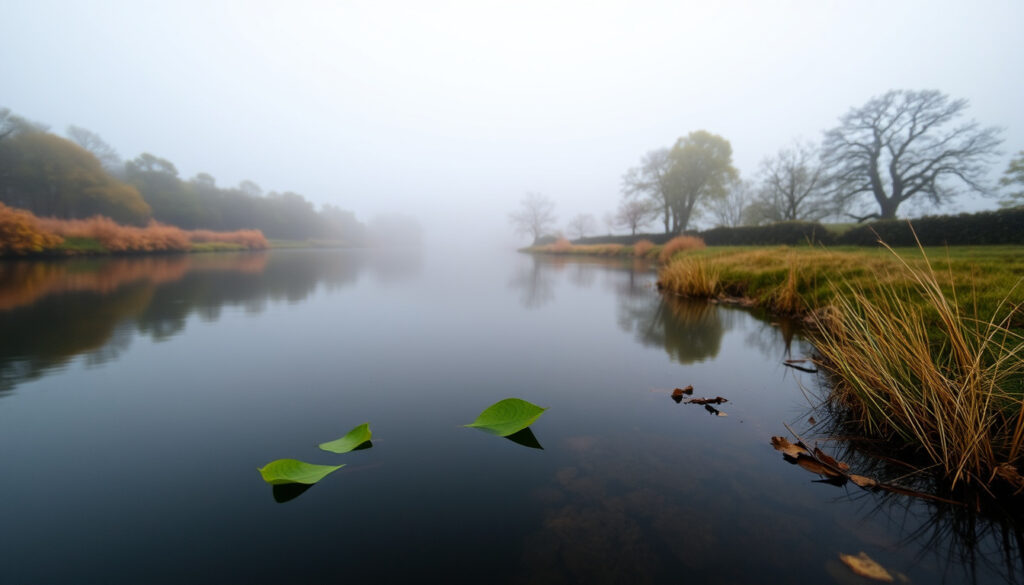
On Raglan Road Lyrics Meaning: The Story Behind the Song
Few Irish songs carry the quiet ache of “On Raglan Road.” A poem turned folk anthem, it tells of a man who meets a woman on a Dublin street, sees the danger in her dark hair, and walks away before it’s too late.
Year written: 1946 ·
Poet: Patrick Kavanagh ·
Popular performer: Luke Kelly ·
Location: Raglan Road, Ballsbridge, Dublin ·
Genre: Irish folk ballad ·
First recording: 1972 (Luke Kelly)
Quick snapshot
- Poem written by Patrick Kavanagh in 1946 (Wikipedia)
- Raglan Road is a real street in Dublin 4 (Wikipedia)
- Song set to the air “The Dawning of the Day” (RTÉ Culture, Ireland’s national broadcaster)
- Exact date Kavanagh met Hilda Moriarty (autumn 1944 commonly cited but unconfirmed) (Irish Independent)
- Whether “angel woos the clay” references a specific theological doctrine is debated (Lyrics Meanings)
- 1946: Poem first published as “Dark Haired Miriam Ran Away” (Wikipedia)
- 1972: Luke Kelly records the song with The Dubliners (IrishCentral)
- Continued covers and live performances keep the song alive globally (The Great Irish Songbook)
- Raglan Road remains a pilgrimage spot for music fans in Dublin (HeadStuff)
Six facts, one pattern: each layer of the song’s story – the poet, the street, the muse, the music – is grounded in a real person or place, but the emotional weight comes from what Kavanagh chose to leave unsaid.
Here is a key facts table summarizing the core details.
| Fact | Detail |
|---|---|
| Poet | Patrick Kavanagh (1904–1967) |
| Year of poem | 1946 |
| First song recording | 1972 by Luke Kelly |
| Street location | Raglan Road, Ballsbridge, Dublin 4 |
| Muse | Hilda Moriarty (later Dr. Hilda O’Donoghue) |
| Marriage of poet | Yes, to Catherine Moloney in 1967 |
What is the meaning of the song ‘On Raglan Road’?
The poem’s origin and transformation into song
- Patrick Kavanagh wrote the poem in 1946 and first published it under the title “Dark Haired Miriam Ran Away” in The Irish Times (Wikipedia).
- He later set it to the traditional Irish air “Fáinne Geal an Lae” (“The Dawning of the Day”) (RTÉ Culture, Ireland’s national broadcaster).
- Luke Kelly of The Dubliners popularised the sung version in the 1960s and recorded it for the 1972 album The Dubliners (Irish Music Daily).
Core themes of love, regret, and mortality
The narrator meets a woman on Raglan Road and immediately recognises that her “dark hair would weave a snare.” He chooses to leave rather than be trapped, a decision that haunts him. The poem is a meditation on desire and self-preservation, with the street serving as a stage for a momentary, life-altering encounter. Irish Music Daily notes that the emotional centre is unrequited or doomed love.
Symbolism of the ‘dark hair’ and ‘snare’
The “dark hair” is both a literal attribute of the woman and a metaphor for allure that leads to captivity. The snare suggests that romantic attachment, however beautiful, can become a trap from which there is no easy escape. According to Lyrics Meanings, the imagery reflects Kavanagh’s own fear of commitment after a painful infatuation.
Who was the woman in Raglan Road?
Hilda Moriarty: the real identity
- Hilda Moriarty was a medical student from Dingle, County Kerry, who lived on Raglan Road while studying in Dublin (The Great Irish Songbook).
- Kavanagh met her in the autumn of 1944, according to a widely repeated account in the Irish Independent.
- She later married a doctor, became Dr. Hilda O’Donoghue, and moved to the United States (The Great Irish Songbook).
Kavanagh’s unrequited love story
Kavanagh was infatuated, but Moriarty did not return his feelings. The poem captures his awareness that the relationship could only end in disappointment. After she left Ireland, Kavanagh carried the memory that became the lasting artistic record.
Correspondence and eventual fallout
Little of their correspondence survives, but Kavanagh’s biographers note that the poet’s letters to Moriarty were intense and ultimately unanswered. The Irish Independent reports that Moriarty later said she was flattered but never in love with him.
When the angel woos the clay meaning?
Literary and religious context
- The line appears in the second verse: “While the angel woos the clay” (Wikipedia).
- “Angel” traditionally represents the soul or divine longing; “clay” refers to the human body, made from dust in the biblical tradition.
- Critics often read it as a paradox: a spiritual entity cannot fully unite with mortal flesh (Lyrics Meanings).
Contrast between spiritual and earthly love
The image reinforces the central tension of the song: the narrator desires the woman but knows that true union is impossible. The “wooing” is a one-way longing that can never be consummated.
Kavanagh’s use of paradox
Kavanagh often employed religious imagery to describe secular emotions. Here, the impossible courtship mirrors his own situation – a poet of humble origin reaching for someone he considered above his station.
Is Raglan Road a real place in Ireland?
Location: Ballsbridge, Dublin 4
- Raglan Road is a residential street in the Ballsbridge area of Dublin 4 (Wikipedia).
- It is lined with Victorian red-brick houses and is a short walk from the Grand Canal.
- The street was named after Lord Raglan, a British commander in the Crimean War (HeadStuff).
Historical significance of the street
Kavanagh lived in nearby lodgings and often walked along Raglan Road in the autumn, the season he describes in the poem. The street became a symbol of lost love in Irish popular culture.
Visitor information and landmarks
Today the road is a quiet suburban address, but music fans and literary pilgrims make the trip. A plaque commemorating the song was erected on nearby Herbert Park in 2016.
Did Patrick Kavanagh ever marry?
Kavanagh’s romantic life
- Kavanagh married Catherine Moloney in 1967, when he was 63 years old (Wikipedia).
- The couple had no children.
- His earlier love for Hilda Moriarty remained unrequited and is the emotional engine of his most famous poem.
Marriage to Catherine Moloney in 1967
Kavanagh’s marriage came late in life, just months before his death in November 1967. Catherine was a friend and supporter who helped manage his literary affairs.
Later years and legacy
Kavanagh died before the song became a global folk standard. Luke Kelly’s 1972 recording introduced it to a new generation, cementing the poet’s reputation beyond the small circle of Irish literary readers.
Timeline
- 1944 (autumn) – Kavanagh meets Hilda Moriarty in Dublin (Irish Independent).
- 1946 – Poem “Raglan Road” (original title “Dark Haired Miriam Ran Away”) published in The Irish Times (Wikipedia).
- 1950s – Hilda Moriarty emigrates to the U.S. after marrying a doctor (The Great Irish Songbook).
- 1967 – Kavanagh marries Catherine Moloney; dies a few months later (Wikipedia).
- c.1960s – Luke Kelly begins performing the poem set to “The Dawning of the Day” (Irish Music Daily).
- 1972 – Luke Kelly records “On Raglan Road” with The Dubliners (IrishCentral).
- 1978 – Kelly’s solo version released on his self-titled album (The Great Irish Songbook).
- 2000s–present – The song becomes a global folk staple (Ireland Calling).
Confirmed facts & What’s unclear
Confirmed facts
- The poem was written by Patrick Kavanagh (Wikipedia).
- Raglan Road is a real street in Dublin (Wikipedia).
- The song is based on Kavanagh’s poem set to a traditional air (RTÉ Culture).
- Hilda Moriarty was the inspiration for the poem (The Great Irish Songbook).
- Luke Kelly popularised the sung version (Irish Music Daily).
- Kavanagh married Catherine Moloney in 1967 (Wikipedia).
What’s unclear
- Kavanagh’s exact feelings toward Hilda Moriarty are not fully documented.
- Whether the “angel woos the clay” line refers to a specific theological concept or is purely poetic is debated.
- The precise date Kavanagh first met Moriarty is unconfirmed (autumn 1944 is the best guess).
- How much of the narrative is autobiographical vs. dramatised.
Quotes
“On Raglan Road on an autumn day I met her first and knew / That her dark hair would weave a snare that I would one day rue.”
– Patrick Kavanagh, from the poem “Raglan Road” (Wikipedia)
“The poem is a lyrical reflection on desire, regret, and emotional vulnerability.”
– Analysis on Lyrics Meanings
The consequence for any listener: the song remains a masterclass in turning personal pain into public art, and every new cover proves that a street corner in Dublin can still break hearts around the world.
Related reading: How Great Thou Art Lyrics
Frequently asked questions
Why is ‘On Raglan Road’ so popular?
Its combination of poetic depth, a haunting melody, and Luke Kelly’s iconic rendition made it a folk standard that transcends Ireland.
Is ‘Raglan Road’ the same as ‘The Dawning of the Day’?
No – “The Dawning of the Day” (also “Fáinne Geal an Lae”) is the traditional Irish air to which Kavanagh set his poem. The melody is the same, but the lyrics are different.
Which artist sang ‘On Raglan Road’ first?
Luke Kelly of The Dubliners is credited with the first recorded version, released in 1972.
What does ‘Weave a snare’ mean in the song?
It means to create a trap. The woman’s beauty and allure will ensnare the narrator, so he decides to leave before it’s too late.
Are there any other versions of ‘On Raglan Road’?
Yes – artists such as Sinéad O’Connor, Van Morrison, Mark Knopfler, and Ed Sheeran have performed or recorded the song.
How long is the song ‘On Raglan Road’?
Most recordings run between 3 and 5 minutes, with Luke Kelly’s version clocking in at 4:42.
What key is ‘On Raglan Road’ played in?
The standard guitar tuning is D major, though it is often played in DADGAD for a fuller folk sound.
More related posts
 FC Barcelona vs Real Madrid: El Clásico Head-to-Head & Results
 Tottenham vs Wolverhampton Wanderers Lineups: Confirmed
 Stand by Me Cast – Then and Now, Ages and Careers
 Tarrant and Tarrant Solicitors: Verified Facts & Status
 Everton vs Manchester United Stats: History and Fan Facts
 National Ploughing Championships 2025 – Dates, Venue and Key Facts
 Farm for Sale Cork – Current Listings Prices Guide
 Members of Oasis (Band): Original Lineup & 2025 Reunion
