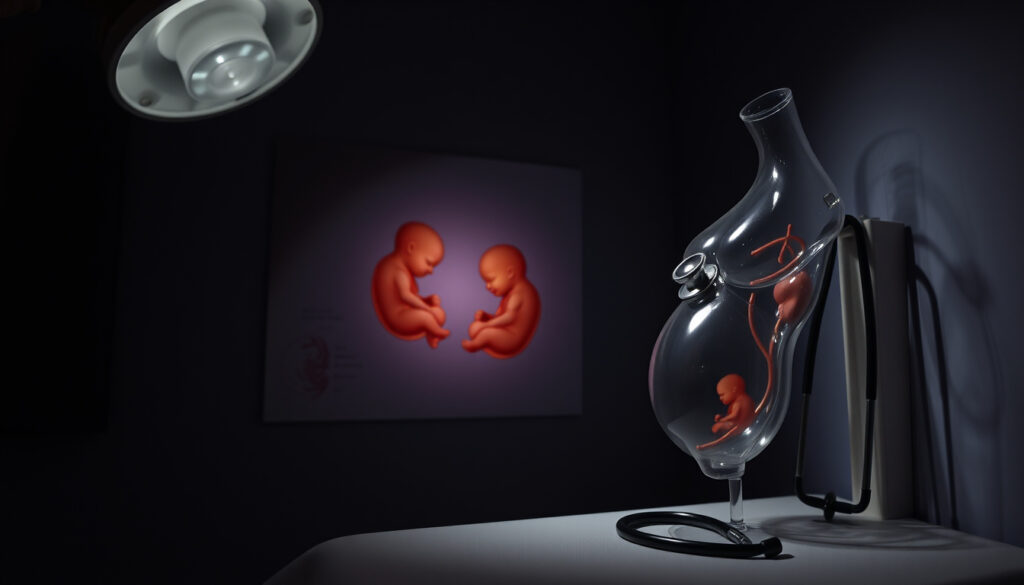
How Babies Are Made: Conception, Fertility & Childbirth
Few questions land with as much curiosity and a touch of awkwardness as “how are babies made.” Whether you’re a parent figuring out how to explain it to a child or a teenager piecing together the biology for the first time, the answer is both simpler and more remarkable than you might think. This guide walks through the entire journey — from a single cell to birth — while tackling the real-life questions families and young people actually ask.
Sperm per ejaculate: 40–300 million ·
Eggs at birth: 1–2 million ·
Fertile window per cycle: ~6 days ·
Average age of first menstruation: 12–13 years ·
Eggs remaining by age 30: ~12% of original supply
Quick snapshot
- Pregnancy requires fusion of a sperm and an egg (Liv Hospital).
- Fertilization occurs in the fallopian tube (Pregnancy Birth and Baby).
- Teen pregnancy carries higher health risks (Advocates for Youth).
- Exact age of first ovulation varies greatly among individuals.
- Individual pain tolerance during childbirth is not fully predictable.
- Timing of egg loss acceleration differs from person to person.
- Pregnancy is dated from last menstrual period — about 2 weeks before conception (Pregnancy Birth and Baby).
- Embryo becomes fetus around week 9 (Pregnancy Birth and Baby).
- Understanding fertility windows can help with family planning. (Shady Grove Fertility)
- Assisted reproductive technologies like IVF offer options (Shady Grove Fertility).
The table below compresses key reproductive statistics for quick reference.
| Fact | Value |
|---|---|
| Sperm per ejaculate | 40–300 million |
| Eggs at birth | 1–2 million |
| Pregnancy rate per cycle (healthy couples) | 20–30% |
| Average age of menopause | 51 years |
| Eggs remaining by age 30 | ~12% of original |
| Time from fertilization to implantation | 4–5 days (Pregnancy Birth and Baby) |
What is the process of making a baby?
- Ovulation releases a mature egg from the ovary into the fallopian tube.
- Sperm from the male swim through the female reproductive tract to reach the egg.
- One sperm penetrates the egg’s outer layer, resulting in fertilization.
- The fertilized egg (zygote) begins dividing as it travels toward the uterus.
- By day 3–4, the blastocyst reaches the uterus and implants into the lining.
- The embryo develops, and around week 9 it becomes a fetus.
- Over about 40 weeks, the fetus grows until birth.
Fertilization: sperm meets egg
The journey begins when a sperm cell from a male fertilizes an egg cell from a female during sexual intercourse. Millions of sperm are released in a single ejaculate, but only a few hundred survive the swim through the female reproductive tract to reach the egg in the fallopian tube (Liv Hospital). Once a sperm penetrates the egg’s outer layer, called the zona pellucida, the egg instantly changes its membrane to block other sperm (Shady Grove Fertility).
- Sperm are produced in the testicles and enter the vagina during intercourse.
Source: Advocates for Youth - Ovulation is triggered by luteinizing hormone; the egg is released 24–36 hours after the LH surge (Shady Grove Fertility).
Implantation in the uterus
After fertilization, the zygote begins dividing as it travels down the fallopian tube. By day 3–4 it becomes a blastocyst, which then implants into the uterine lining (Liv Hospital). Successful implantation triggers hormonal changes that can be detected by pregnancy tests.
Development of the embryo and fetus
The blastocyst develops into an embryo. Around week 9 of pregnancy — counting from the last menstrual period — the embryo becomes a fetus (Pregnancy Birth and Baby). The placenta supplies oxygen and nutrients throughout the pregnancy.
At what age can a boy get a girl pregnant?
Puberty and sperm production
Boys typically start producing sperm during puberty, usually between ages 11 and 16 (Advocates for Youth). Once sperm production begins, a boy can potentially father a child — even before his first ejaculation if pre-ejaculate contains sperm.
Fertility in teenage boys and girls
Girls can become pregnant after their first ovulation, which may occur before their first period (Shady Grove Fertility). That means a 13‑year‑old girl can indeed get pregnant if she is ovulating and has unprotected intercourse. The average age of first menstruation is 12–13 years, but ovulation can start earlier.
Risks of teenage pregnancy
Teenage pregnancy carries higher health risks for both mother and baby, including preterm birth and low birth weight (Advocates for Youth). Education about contraception and consent is critical for preventing unintended pregnancies.
Fertility can begin before any outward signs of puberty. A 15‑year‑old boy producing sperm can make a woman pregnant, even if he hasn’t had his growth spurt yet. That’s why age‑appropriate conversations should start early — not after the fact.
The implication: parents must proactively discuss reproductive health before puberty appears, using honest, simple language.
Is child delivery painful?
What causes pain during labor
Childbirth pain comes from uterine contractions and pressure on the cervix. As the muscles of the uterus tighten to push the baby out, the sensation can be intense. The pain is a normal physiological response (Pregnancy Birth and Baby).
Pain management options
- Epidural anesthesia: numbs the lower body while allowing the mother to remain awake.
- Nitrous oxide (gas and air): reduces pain without eliminating sensation.
- Natural techniques: breathing, movement, water immersion, and massage.
Individual variation in pain experience
Pain perception varies widely. Some women report manageable discomfort, while others describe it as severe. Factors include baby’s position, length of labor, and individual pain tolerance. No two births are identical.
For expectant parents, knowing that pain is not inevitable — and that many options exist — can reduce fear. A doula or childbirth class can help prepare both physically and mentally.
The pattern: childbirth pain is highly individual, and preparation through education and support can improve the experience.
At what age are 90% of a woman’s eggs gone?
Ovarian reserve decline over time
A female fetus has about 1–2 million eggs at birth. By puberty, only ~300,000 remain. The decline continues with age. By age 30, only about 12% of the original egg supply is left (Shady Grove Fertility). The rate of loss accelerates after 35, and by age 40, the chance of natural conception per cycle drops below 5%.
Fertility milestones by age
- Age 20–25: peak fertility period.
- Age 30: ~12% of original eggs remain.
- Age 35–37: accelerated decline, increased difficulty conceiving.
- Age 40: natural conception rate below 5% per cycle.
- Average age of menopause: 51 years (Pregnancy Birth and Baby).
Factors affecting egg count
Genetics, medical conditions (e.g., endometriosis), smoking, and certain cancer treatments can accelerate egg loss. Egg freezing offers a way to preserve fertility for later use.
How are babies made in Islam?
Islamic view on reproduction
Islam regards procreation as a blessing within marriage. Sexual intercourse is permitted only between spouses. The act of making babies is seen as a natural process designed by Allah, and it is encouraged for Muslims to understand the biological basics within a faith‑based framework (Advocates for Youth).
Age-appropriate conversations in Muslim families
Sex education is recommended within the bounds of Islamic teachings — promoting modesty, respect, and health awareness. Many scholars advise starting with biological facts (how the body changes) before discussing intercourse.
Assisted reproductive technologies (ART) in Islam
IVF and other ARTs are generally permitted if the sperm comes from the husband and the egg from the wife. Third‑party donors (egg, sperm, or surrogacy) are debated among scholars but often prohibited. The goal is to preserve the lineage of marriage (Shady Grove Fertility).
“A baby starts when a tiny sperm from a man meets an egg from a woman. The egg and sperm join together in the woman’s fallopian tube, and then the fertilised egg travels to the uterus where it grows into a baby.”
— Dr. Chris from BBC’s Operation Ouch, as quoted in The Conversation (Curious Kids series)
“After about nine months of growing, the baby is ready to be born. The mother’s body pushes the baby out through the vagina — this is called labour.”
— Dr. Xand and Dr. Ronx, BBC’s Operation Ouch
“The most important thing is to give a simple, honest answer. You don’t need to tell a five‑year‑old about pelvic thrusts — just that a sperm and an egg meet and grow in a special place inside the mother.”
— The Conversation (Curious Kids)
The pattern: Across medical and educational sources, the core narrative is consistent — start with the sperm‑egg fusion, explain the womb as the growth environment, and tailor the detail to the child’s age. For Muslim families, framing reproduction within the blessing of marriage and avoiding graphic detail until the child is older aligns with cultural and religious values.
What this means: Parents and teens looking for answers now have a single reference that connects the biological facts to the real questions about age, pain, fertility, and faith. For a 13‑year‑old wondering if she can get pregnant, the answer is yes — and the risks are real. For a woman at 30 thinking about her egg reserve, the clock is ticking, but options exist. The conversation shouldn’t be one talk; it should be a series of age‑appropriate discussions over years.
Telling children too much too soon can overwhelm them; telling them too late can leave them vulnerable. The best approach is to answer the question they actually asked, then let them ask for more. Resources like the BBC’s Operation Ouch and The Conversation’s Curious Kids provide trusted, age‑tailored language.
For a detailed look at the biological process of conception, including the role of sperm and egg cells, this guide offers a clear explanation.
Frequently asked questions
Why does my 2 year old rub her privates?
Toddlers often explore their bodies out of curiosity. It is normal self‑discovery and not sexually motivated. If it becomes persistent or uncomfortable for the child, consult a paediatrician.
Can a 13 year old girl get pregnant?
Yes. If she has started ovulating — which can happen before her first period — unprotected intercourse can lead to pregnancy. Education and contraception are key (Advocates for Youth).
How long does a typical pregnancy last?
About 40 weeks from the first day of the last menstrual period. That’s roughly nine months (Pregnancy Birth and Baby).
What happens during fertilization?
A sperm penetrates the egg’s outer layer in the fallopian tube. The egg immediately blocks other sperm, and the combined cell (zygote) begins dividing (Shady Grove Fertility).
Can pregnancy occur if the man pulls out?
Yes. Pre‑ejaculate can contain sperm, and withdrawal does not guarantee protection. It is not a reliable birth control method.
Is it possible to get pregnant from oral sex?
No. Pregnancy requires sperm to reach the vagina and fertilise an egg. Oral sex does not involve the necessary contact.
What is the difference between identical and fraternal twins?
Identical twins come from one fertilised egg that splits. Fraternal twins come from two separate eggs fertilised by two separate sperm. Fraternal twinning can run in families.
For parents seeking more context on child health, see Child Support Payment 2026 – Rates, Eligibility & How to Apply and Vermox Dosage for Child.
More related posts
 4 in 1 Chinese: Calories, Ingredients & Health Guide
 How Great Thou Art Lyrics: Origin, Story, and Full Text
 Galway to Cliffs of Moher: How to Get There, Tours, Tips & FAQs
 Ready Made Curtains Ireland: Online, Sales & Stockists
 Houses for Sale in Clonmel: Guide for First-Time Buyers
 How Many Calories in a Chicken Fillet Roll? (2025 Guide)
 Bank of Ireland Share Chat – Forums Prices and Bullish Sentiment
 Volume of a Sphere: Formula, Derivation, and Examples
