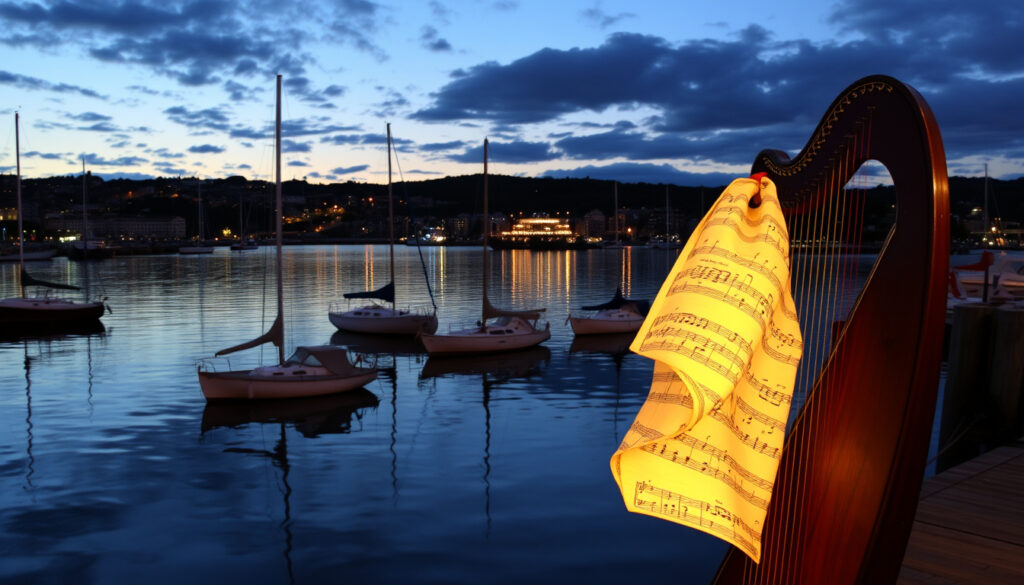
Sounds from a Safe Harbour – Guide to Cork Festival History and Symbolism
The phrase “sounds from a safe harbour” carries layered meaning in both cultural and nautical contexts. Primarily, it refers to a biennial arts festival in Cork, Ireland, that has reshaped the city’s cultural landscape since its launch. Beyond the festival, the expression draws on centuries of maritime symbolism, where harbours and sea songs have long represented refuge, homecoming, and shared human experience.
This guide examines the origins, significance, and cultural references tied to the phrase, alongside practical details about the Cork festival and its broader symbolism in art and literature.
Sounds from a Safe Harbour: Festival Overview
Sounds from a Safe Harbour (SFSH) is a multidisciplinary arts festival held across Cork, Ireland. The event brings together music, dance, literature, theatre, film, visual art, and conversation in venues and public spaces throughout the city.
Sounds from a Safe Harbour
Cork, Ireland (River Lee)
Multidisciplinary arts festival
10th anniversary, 2025
- Founded in 2015 as a collaborative community arts initiative
- Biennial schedule, with the 10th edition running September 11–14, 2025
- Co-founded by Mary Hickson, who has emphasised its role in building community spaces
- 2025 coincides with Cork’s inclusion in National Geographic’s Top 25 Places to Visit
- Programme spans music, dance, literature, theatre, film, and visual art installations
- Features pop-up concerts, choreographer-musician collaborations, and public discussions
- Notable past performers include Lisa Hannigan, The National, Bon Iver, Ólafur Arnalds, and Feist
| Aspect | Details |
|---|---|
| Festival Name | Sounds from a Safe Harbour (SFSH) |
| First Held | 2015 |
| Host City | Cork, Ireland |
| 2025 Dates | September 11–14, 2025 |
| Disciplines | Music, dance, literature, theatre, film, visual art |
| Notable Artists | Lisa Hannigan, The National, Bon Iver, Ólafur Arnalds, Feist |
| Special Focus 2025 | Healing frequencies and peace-themed bell-ringing |
| Festival Co-Founder | Mary Hickson |
Origins and History of the Festival
Sounds from a Safe Harbour launched in 2015 as a collaborative effort to bring the community together through boundary-pushing art. What began as a grassroots initiative has grown into one of Ireland’s most anticipated cultural events, drawing both international artists and local audiences into shared experiences across the city.
Over successive editions, the festival has built a reputation for pairing world-class performers with experimental programming. Artist residencies and pop-up concerts have become hallmarks, offering audiences intimate encounters with work that blends disciplines in unconventional ways. Discussions featuring writers, choreographers, and visual artists have added a conversational dimension to the programme, deepening the festival’s intellectual and community impact.
According to co-founder Mary Hickson, the festival has consistently emphasised its role in building community spaces rather than simply staging performances. This ethos has helped SFSH establish a loyal following and attract collaborators who share its commitment to inclusive, meaningful art.
The 2025 edition marks the festival’s 10th anniversary, coinciding with Cork’s recognition by National Geographic as one of the Top 25 Places to Visit. The programme highlights include bell-ringing events using Solfeggio frequencies, a meditation on peace, and performances across multiple venues in the city.
Evolution and Growth Since 2015
From its earliest editions, SFSH prioritised the idea of the city itself as a venue. Performances have taken place in theatres, churches, outdoor spaces, and unexpected locations across Cork, transforming familiar surroundings into sites of artistic encounter.
The inclusion of voices such as Max Porter and Dorothy Cross in festival discussions has reflected the organisers’ commitment to bringing writers and visual artists into dialogue with musicians and performers. This interdisciplinary approach has differentiated SFSH from festivals with a narrower focus.
Geographic Setting: Cork and the River Lee
Cork’s position on the River Lee gives the festival its distinctive geographic character. The river runs through the city centre, creating a coastal-urban atmosphere that resonates with the festival’s nautical themes. Venues along the river and in the surrounding neighbourhoods contribute to an experience that feels rooted in place.
The city’s inclusion in National Geographic’s Top 25 Places to Visit has brought increased attention to Cork’s cultural offerings, including SFSH. Visitors searching for accommodation close to major attractions may find a Premier Inn Near Blarney Castle convenient for combining festival attendance with broader sightseeing.
Etymology, Symbolism, and Nautical Connections
The title “Sounds from a Safe Harbour” carries layers of meaning rooted in maritime tradition. At its core, the concept of a safe harbour refers to a place of shelter from storms at sea—a site where weary travellers find refuge, rest, and the prospect of homecoming. This imagery has permeated nautical lore for centuries, shaping how seafarers and coastal communities understand safety, journey, and arrival.
Sea Shanties and Work Songs
The word “sounds” in the festival title echoes the tradition of sea shanties—work songs sung by crews during labour-intensive tasks aboard ship. These chants provided rhythmic coordination for activities such as raising sails, hauling anchors, and working capstans. Shanties served a practical purpose while also offering sailors an emotional outlet during long voyages.
Scholars trace the etymology of “shanty” possibly to the Latin celeusma, referring to oarsmen’s chants, via the Spanish saloma or French linguistic influences. This origin distinguishes maritime shanties from North American hut structures, which derive from the French chantier. The connection between sound, rhythm, and communal labour remains central to understanding shanty traditions.
No single literary origin for the exact phrase “sounds from a safe harbour” has been identified in historical records. However, the nautical symbolism of harbours as places of refuge and healing appears consistently in Anglo-Saxon poetry and later maritime literature. The phrase blends this symbolism with the auditory dimension of sea shanties, a tradition also linked to rhythm, survival, and collective effort.
Metaphorical Dimensions
In literature, the anchor has frequently served as a metaphor for holding “wandering souls” in place—a symbol of stability amid uncertainty. Herman Melville captured this tradition in Moby-Dick, where the shanty “Ho, cheerly men!” accompanies anchor work, grounding sailors to their vessel and to one another. The 19th-century novelist Patrick O’Brian similarly drew on Old English and Norse shanty traditions in his sea tales.
The broader symbolism of sea songs extends beyond mere rhythm. They encode survival rules, generate energy for physical labour, and carry nostalgia for adventure and discovery. These qualities inform how contemporary festivals like SFSH interpret shanty traditions—not as historical curiosity but as living frameworks for communal experience.
Context and Cultural References
In its modern usage, Sounds from a Safe Harbour reinterprets maritime symbolism for contemporary audiences. The festival weaves together music, healing practices, and communal gathering, creating spaces where art functions as refuge in a way that mirrors the traditional role of the harbour.
This resonance with nautical tradition appears throughout the programme. Pop-up concerts in unexpected locations echo the surprise encounters of life at sea; large-scale performances in historic venues recall the grandeur of ships arriving in port; discussions and readings draw on a literary heritage that stretches from Melville to contemporary Irish writers.
Contemporary Art and Healing Themes
The 2025 edition has placed particular emphasis on healing and solidarity. Bell-ringing events at Cork’s historic Shandon Bells use Solfeggio frequencies—174Hz associated with physical healing and 639Hz linked to the heart chakra—to create moments of communal well-being. These events are accompanied by meditation led by Max Porter, whose words explicitly connect the act of ringing bells for peace with solidarity for Gaza.
The 2025 bell-ringing meditation quoted by Max Porter included the line: “We ring the bell for peace in solidarity with the people of Gaza. From Cork City, in mourning, with love. Free Palestine.” This reflects the festival’s stated commitment to political expression alongside artistic programming. Audiences attending such events should expect performances and discussions that engage with contemporary social issues directly.
Literary and Musical Traditions
The festival programme has consistently drawn on literary and musical traditions that parallel its themes. Authors such as Max Porter and visual artists like Dorothy Cross have contributed to discussions that connect storytelling, place, and the search for shelter—both literal and metaphorical.
In the broader cultural landscape, political musiktheater has explored related themes. Works such as Mauricio Kagel’s Mare Nostrum examine the Mediterranean as a contested space, reflecting anxieties about migration, sovereignty, and the meaning of shared waters—themes that echo through the safe harbour concept.
Sea shanties themselves have functioned as survival guides, carrying practical knowledge alongside emotional weight. Contemporary festivals that incorporate these traditions do so with an awareness of their dual function: rhythm for labour, and expression of longing for home or horizon. This duality informs how SFSH approaches its programming, balancing entertainment with depth.
Festival Timeline
- 2015 — Sounds from a Safe Harbour launches in Cork as a collaborative community arts festival, co-founded by Mary Hickson.
- 2015–2023 — The festival grows across successive editions, attracting internationally recognised artists including Lisa Hannigan, The National, Bon Iver, Ólafur Arnalds, and Feist.
- 2024 — SFSH continues to expand its multidisciplinary programme, adding new venues and community-focused initiatives.
- 2025 — Cork is named one of National Geographic’s Top 25 Places to Visit.
- September 11–14, 2025 — The 10th anniversary edition of SFSH takes place, featuring bell-ringing with healing Solfeggio frequencies, pop-up concerts, and peace-themed events.
What We Know — and What Remains Unclear
| Established Information | Information That Remains Unclear |
|---|---|
| SFSH is a biennial arts festival first held in Cork in 2015. | Whether the festival founders drew explicitly on shanty traditions or nautical symbolism in naming the event has not been publicly confirmed. |
| The 10th anniversary edition runs September 11–14, 2025. | Specific venues for all 2025 programme events had not been fully disclosed at the time of reporting. |
| Co-founder Mary Hickson has emphasised the festival’s role in building community spaces. | Details of future editions beyond 2025 have not been publicly announced. |
| Cork’s inclusion in National Geographic’s Top 25 Places to Visit is documented. | The extent to which individual festival editions build on each other’s artistic themes versus operating independently remains unclear from public sources. |
| Bell-ringing events in 2025 use Shandon Bells with Solfeggio frequencies alongside Max Porter’s peace meditation. | The total number of individual events across the 2025 programme has not been comprehensively confirmed. |
The Symbolism of Harbours in Art and Literature
The harbour as a symbol predates modern literary tradition. In Anglo-Saxon poetry and subsequently in 18th-to-21st-century travel writing, harbours function as thresholds between the known and unknown—places where journeys pause, travellers recuperate, and new chapters begin. This symbolic weight has made the harbour a recurring motif in work that deals with displacement, homecoming, and the search for belonging.
Sounds from a Safe Harbour draws on this deep well of meaning without claiming a single literary origin for its title. The phrase synthesises auditory experience (“sounds”) with spatial symbolism (“safe harbour”), creating a compound image that speaks to both physical shelter and emotional refuge. The festival’s programme—spanning disciplines from music to literature to visual art—reflects this layered ambition.
Bruce Chatwin’s travel writing offers a parallel in its treatment of seafaring attire and nostalgia, while James Kirkpatrick’s songs evoke maritime journeys that span continents and centuries. These cultural references do not prove a direct literary lineage for the festival’s name but rather demonstrate that the underlying symbolism belongs to a shared vocabulary accessible across traditions and genres.
Sources, Quotes, and Further Reading
“We ring the bell for peace in solidarity with the people of Gaza. From Cork City, in mourning, with love. Free Palestine.”
— Max Porter, bell-ringing meditation, SFSH 2025 (as reported by RTÉ)
Primary coverage of SFSH has appeared in Irish cultural outlets including RTÉ, which reported on the 10th anniversary programming, and Hot Press, which confirmed the festival dates. The Journal of Music provides ongoing listings and background on the festival’s development.
Academic context for the nautical symbolism underlying the festival’s title is available through research on sea shanty interpretation from the University of Valladolid, which examines shanty traditions, their etymology, and their literary function. Further perspective on the broader cultural references appears in analysis of political musiktheater published in the Journal of the American Musicological Society.
Summary
Sounds from a Safe Harbour operates on multiple levels simultaneously. As a festival, it is a concrete cultural event held in Cork, Ireland, since 2015, celebrating its 10th anniversary in 2025 with an ambitious multidisciplinary programme. As a phrase, it draws on centuries of nautical symbolism in which harbours represent refuge, homecoming, and the pause between journeys. This dual identity—anchored in a specific real-world event and connected to a broader cultural heritage of sea songs, literature, and collective experience—gives the phrase its particular resonance.
For those planning to attend the festival or explore Cork’s cultural offerings, the city offers a range of events and accommodation options. Visitors attending the National Ploughing Championships 2025 may find Cork’s cultural calendar a compelling complement to that national event.
Frequently Asked Questions
When was Sounds from a Safe Harbour first held?
The inaugural edition of Sounds from a Safe Harbour took place in 2015 in Cork, Ireland. It was co-founded by Mary Hickson as a community-focused arts festival.
What is special about the 2025 edition of the festival?
The 2025 edition marks the festival’s 10th anniversary. Programming includes bell-ringing events using Solfeggio frequencies, peace meditation, and a wide range of music, dance, and literature events. The festival coincides with Cork’s inclusion in National Geographic’s Top 25 Places to Visit.
Where does the Sounds from a Safe Harbour festival take place?
The festival takes place across multiple venues and public spaces in Cork, Ireland, a city situated on the River Lee. Venues include theatres, churches, and outdoor locations throughout the city centre and surrounding neighbourhoods.
What art forms are featured at the festival?
SFSH programme spans music, dance, literature, theatre, film, visual art installations, and public conversations. Pop-up concerts and interdisciplinary collaborations between choreographers and musicians are recurring features.
Which artists have performed at the festival?
Past performers have included Lisa Hannigan, The National, Bon Iver, Ólafur Arnalds, and Feist, among others. The festival also features Irish and international choreographers, writers, and visual artists in discussion and performance formats.
Is Sounds from a Safe Harbour an annual event?
No. The festival follows a biennial schedule, meaning it is held every two years rather than annually. The 10th anniversary edition in 2025 is the seventh edition since the festival launched.
What does the phrase “sounds from a safe harbour” mean?
The phrase combines the auditory tradition of sea shanties—work songs sung at sea—with the symbolism of a harbour as a place of shelter and homecoming. The festival reinterprets this nautical imagery within a contemporary arts context, using music, healing practices, and community gathering as expressions of refuge and solidarity.
More related posts
 Bank of Ireland Share Chat – Live Discussions and Analysis
 Cork to Amsterdam Flights: Airlines, Prices & Route Changes 2025
 Tulfarris Hotel & Golf Resort: Lakeside Retreat Guide
 PureTech Health Share Price: PRTC Buy Analysis & Forecast
 Crystal Palace vs Burnley: Head-to-Head, Prediction, and How to Watch
 Hidden Assets Season 3: Release Date, Cast & Where to Watch
 Car Boot Sale Kilkenny: Tips, Dates & Venues for 2025
 Anniversary Gifts by Year: Traditional & Modern Guide
