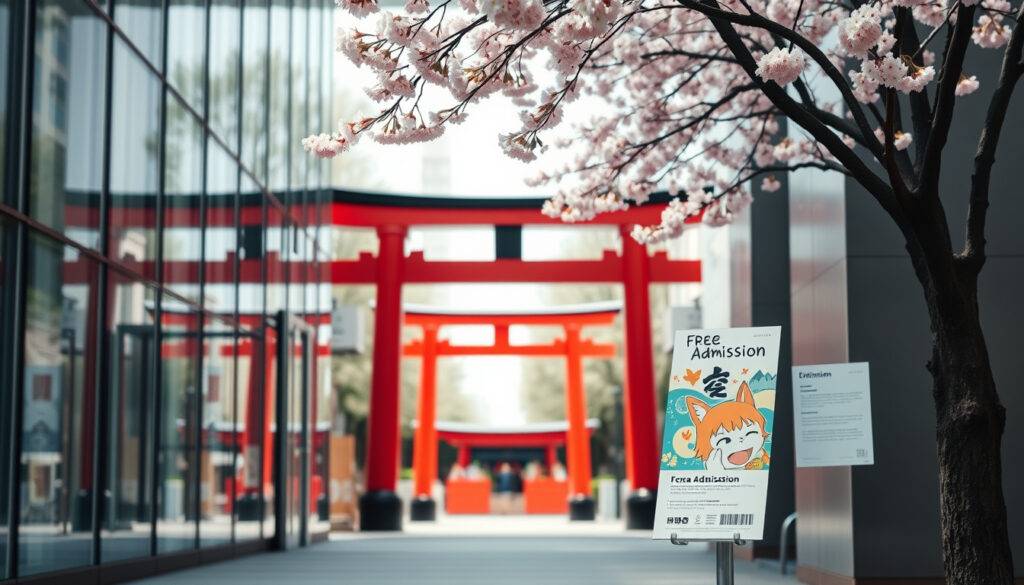
Best Museums in Tokyo: Art, Free, and Ghibli Tickets
Anyone who has tried to plan a Tokyo itinerary with a museum lover knows the problem: too many good options, not enough mornings. The city counts more than 100 museums, and the ones worth your time tend to demand planning — the Ghibli Museum, for instance, takes advance reservations only via Ghibli Museum (official ticketing page).
Museums in Tokyo: 100+ · Oldest museum: Tokyo National Museum (1872) · Free museums: 11 as of October 2026 · Most famous museum: Tokyo National Museum · Top art museum: Mori Art Museum
Quick snapshot
- Ghibli Museum is in Mitaka, Tokyo, and entry is by advance reservation only (Ghibli Museum (official directions page))
- Ghibli Museum tickets run from JPY 1,000 for adults down to free for children under 4 (Ghibli Museum (official ticketing page))
- The Tokyo Metropolitan Art Museum building is free to enter; only exhibitions are ticketed (Japan Cultural Expo (government-backed culture project))
- The exact number of museums in Tokyo depends on whether small private galleries and themed spaces count as museums
- Free-admission dates can shift from year to year, so official calendars need a check before you travel
- Monthly Ghibli Museum availability fluctuates; some months sell out quickly while others leave windows open
- Ghibli Museum tickets for the following month go on sale at 10 a.m. JST on the 10th of each month (Tokyo Museums (city museum guide))
- Tokyo National Museum opens its Collection Exhibitions free on May 19, Respect for the Aged Day, and Culture Day (Tokyo National Museum (official free-admission FAQ))
- Ghibli Park tickets do not work at Ghibli Museum, Mitaka — the two attractions are separate bookings (Ghibli Park (official overseas ticket page))
- Build your Tokyo museum plan around Ghibli Museum’s monthly release date: the 10th, at 10 a.m. JST (Ghibli Park (official overseas ticket page))
Three numbers capture the shape of Tokyo’s museum scene: more than 100 venues, at least 11 free, and one institution — Tokyo National Museum — that outranks the rest on both age and reputation.
The table below lines up the essential facts for planning.
| Fact | Detail | Source |
|---|---|---|
| Oldest museum | Tokyo National Museum, founded 1872 | Tokyo National Museum (official visitor information) |
| Free museums | 11, including the Sumo Museum and Meguro Parasitological Museum | Tokyo Museums (city museum guide) |
| Adult Ghibli ticket | JPY 1,000 | Ghibli Museum (official ticketing page) |
| Ghibli ticket release | 10 a.m. JST on the 10th of each month, for the next month | Ghibli Museum (official ticketing page) |
| Free museum building | Tokyo Metropolitan Art Museum | Japan Cultural Expo (government-backed culture project) |
| National Art Center | No permanent collection; building free, exhibitions paid | Tokyo Museums (city museum guide) |
| Ghibli Museum vs Ghibli Park | Tickets are not interchangeable | Ghibli Park (official overseas ticket page) |
What should I not miss in Tokyo?
Ask five locals and you will get six lists, but the same names keep appearing: the national collection, the digital spectacle, the contemporary powerhouses, and the intimate artist shrine.
The short list
- Tokyo National Museum — history on a grand scale, from national treasures to everyday objects
- Edo-Tokyo Museum — the interactive stop for a city that keeps rebuilding itself
- teamLab Borderless — a digital art museum that fills entire rooms with light and motion
- Mori Art Museum — contemporary art with a skyline view from the top of Roppongi Hills
- Yayoi Kusama Museum — a few small floors of the artist’s dots, pumpkins, and mirrors, booked by timed entry
The split is clearer than it looks. Tokyo National Museum and Edo-Tokyo Museum explain where the city has been; teamLab Borderless and Mori Art Museum show where it is going; the Kusama Museum is the personal wild card.
If you have one museum day, spend the morning at the national collection and the afternoon at one contemporary space. That pairing reads like the city itself — older than most visitors expect, newer than any of them imagine.
Even the best museums in Tokyo fight for your single trip budget. Pick one history stop and one contemporary stop, and you will leave with a complete picture instead of a camera roll of ticket stubs.
The pattern: Tokyo’s can’t-miss list is really two lists — keepers of memory and makers of spectacle. A balanced itinerary takes one from each, and that pairing is what turns a museum day into an argument for coming back.
What are some of the best art museums to visit in Tokyo?
Tokyo’s art scene runs on special exhibitions. Almost every major museum below is a platform for rotating shows rather than a permanent collection, which means the best museum at any moment is the one with a show you actually want to see.
Five rooms worth seeking out
- Mori Art Museum — contemporary art with a Roppongi Hills skyline view
- National Art Center Tokyo — Japan’s largest exhibition space, with a free building and paid shows
- Suntory Museum of Art — traditional Japanese craft and design in a calm, quiet gallery
- Ota Memorial Museum of Art — ukiyo-e woodblock prints
- Yayoi Kusama Museum — a few floors of polka dots, pumpkins, and infinity rooms
Two of these deserve special attention from first-timers. The National Art Center Tokyo is the country’s largest exhibition venue, yet it has no permanent collection at all — the building, art library, shop, and restaurant are open for free, and you pay only for the exhibition you enter, according to Tokyo Museums (city museum guide). Mori Art Museum, meanwhile, sits high in Roppongi Hills, so a ticket buys contemporary art plus one of the best free views of the city.
The smaller rooms reward patience. Ota Memorial Museum rotates its ukiyo-e collection, which means the prints on the wall change regularly; Suntory Museum focuses on traditional Japanese design; and the Kusama Museum runs strictly timed entries that keep crowds low.
Because these museums work on rotating exhibitions, the best art museum in Tokyo is whichever one has a show that matches your taste during your exact travel dates — check the current calendar before you commit.
Are Tokyo museums free to enter?
Some are free all the time; others are free on fixed dates; the rest are free only in the lobby. The honest answer is yes — for visitors who plan around the free calendar.
Where the free entry actually lives
- Tokyo National Museum: free for high-school students and younger, visitors over 70, and people with disabilities plus one attendant, with proof of age or disability required — and the TNM Collection Exhibitions are free on International Museum Day (May 19), Respect for the Aged Day, and Culture Day (Tokyo National Museum (official free-admission FAQ))
- Tokyo Metropolitan Art Museum: the building is free to enter; exhibition fees vary by show (Japan Cultural Expo (government-backed culture project))
- National Art Center Tokyo: the building, art library, shop, and restaurant floor are free, but every exhibition charges separately; the Sumo Museum and the Meguro Parasitological Museum are free outright (Tokyo Museums (city museum guide))
Chained together, those three facts make a full zero-yen museum day: two major buildings, two niche museums, and a flagship collection on a free date. Tokyo’s free-museum tier sat at 11 venues as of October 2026, which makes this the easiest city in Japan to see on a shoestring — with planning.
Free entry in Tokyo is real but conditional. Align TNM’s free dates with the two free museum buildings and the day costs nothing; walk in cold and you will pay for exhibition after exhibition.
What this means: “free museum” in Tokyo almost always carries fine print — an age limit, a fixed date, or the building-versus-exhibition distinction. Read it before you plan the day, and the free list becomes one of the best values in the city.
What is the oldest museum in Tokyo?
The answer doubles as the city’s most famous museum name: Tokyo National Museum, founded in 1872.
What makes it the benchmark
- Founded in 1872, it is Japan’s oldest museum and its largest (Tokyo National Museum (official visitor information))
- The collection spans more than 110,000 artifacts, including national treasures and important cultural properties (Tokyo National Museum (official visitor information))
- Two parts of the museum campus — the Kuroda Memorial Hall and the Research and Information Center — can be entered free of charge (Tokyo National Museum (official visitor information))
Age alone does not explain the museum’s pull. Because it grew with the country itself, the collection moves from ancient Buddhist sculpture to samurai armor to modern crafts in one visit — a condensed version of how Japan sees its own history.
More than 110,000 artifacts is the kind of number that only makes sense in person: it is the museum equivalent of reading Japan’s entire history in one sitting.
For a visitor with limited time, the practical move is to treat it as a half-day and combine it with the free-entry buildings above. The regular galleries are the anchor; the free halls are a bonus that keeps the ticket price honest.
The implication: “oldest” here does not mean dusty. Tokyo National Museum is both the historical anchor of the city’s museum world and the standard every newer museum measures itself against.
Where is the Real Studio Ghibli museum located?
It sits in Mitaka, a green residential suburb west of central Tokyo — not in the city center, and not inside Ghibli Park, which is a separate attraction with a separate ticket.
Getting there and getting in
- From Shinjuku, take the JR Chuo Line to Mitaka Station; the museum is a short bus ride or walk from the station (Ghibli Museum (official directions page))
- Entry is by advance reservation only — no tickets are sold at the museum, and resale purchases are not allowed (Ghibli Museum (official ticketing page))
- Tickets for the following month go on sale at 10 a.m. JST on the 10th of each month through Lawson Ticket (Ghibli Museum (official ticketing page))
The price structure is the easiest part of the visit: the younger the visitor, the lower the price, and children under four get in free (Ghibli Museum (official ticketing page)).
The age-based pricing is shown below.
| Age | Ticket price |
|---|---|
| 19 and over | JPY 1,000 |
| 13-18 | JPY 700 |
| 7-12 | JPY 400 |
| 4-6 | JPY 100 |
| 3 and under | Free |
The catch: the pricing is simple; the booking side is where Tokyo thins the crowd.
The booking side is where Tokyo thins the crowd. Lawson Ticket is the official sales channel, and a purchase requires a Lawson WEB membership plus phone verification; each account can make one purchase per month with a maximum of six tickets, according to Tokyo Museums (city museum guide). Because the resale market is banned, a sold-out month has no legitimate workaround — which is exactly why the 10th matters.
And the Ghibli name creates one more trap: Ghibli Park. Despite the shared brand, Ghibli Park tickets are not valid at Ghibli Museum, Mitaka, and museum tickets are not valid at the park, according to Ghibli Park (official overseas ticket page).
If you like ticket-first travel planning, our guides to Powerscourt House and Gardens and the Galway to Cliffs of Moher route use the same approach: transport, tickets, and what is actually worth your time.
Museum hopping in Tokyo: the upsides and downsides
Before you fill a week with museum visits, weigh what Tokyo does well against where it stings.
Upsides
- Real free tiers: 11 free museums, TNM free dates, and two major free museum buildings (Tokyo Museums (city museum guide))
- World-class depth: more than 110,000 artifacts under one roof at Tokyo National Museum (Tokyo National Museum (official visitor information))
- Timed-entry systems spread crowds at the most popular museums
- A mix no other city matches: ukiyo-e, modern masters, digital immersion, and pop culture in one metro system
Downsides
- Headline venues sell out, and day-of walk-ups often fail (Tokyo Museums (city museum guide))
- Ghibli booking requires a Lawson WEB membership, phone verification, and a six-ticket cap (Tokyo Museums (city museum guide))
- Free buildings hide paid exhibitions at the National Art Center and Tokyo Metropolitan Art Museum (Japan Cultural Expo (government-backed culture project))
- Resale bans mean no last-minute fix when a Ghibli month sells out (Ghibli Museum (official ticketing page))
The trade-off: Tokyo delivers more museum per yen than most world cities, but it charges for friction. The cheapest venues are often the hardest to enter, and the most famous ones demand the most lead time.
What’s confirmed, what’s still unclear
Two lists: what the sources agree on, and what still needs a check before you plan.
Confirmed
- TNM free admission for under-18s, over-70s, and visitors with disabilities plus one attendant (Tokyo National Museum (official free-admission FAQ))
- TNM free dates: May 19, Respect for the Aged Day, Culture Day (Tokyo National Museum (official free-admission FAQ))
- Ghibli Museum advance-only entry, no on-site sales, no resales (Ghibli Museum (official ticketing page))
- Ghibli pricing: JPY 1,000 / 700 / 400 / 100 / free by age (Ghibli Museum (official ticketing page))
- National Art Center has no permanent collection, and its building is free (Tokyo Museums (city museum guide))
What’s still unclear
- Tokyo’s exact museum count shifts with how galleries and themed spaces are defined
- Free-admission dates can change year to year, so the 2027 calendar is not locked yet
- Ghibli availability varies month to month, so a “usually bookable” month can still sell out fast
- Some policies — such as which museums cannot be bought at the door — come from third-party guide pages rather than official sites (Tokyo Museums (city museum guide))
What matters: the confirmed list is strong enough to build a trip around, while the unclear items sit at the margins — counts, future dates, and availability. Book the flagship tickets first and the rest of the itinerary stays low-risk.
In their own words
The official pages say it better than any travel blog — here are the policies that actually shape a Tokyo museum trip.
“Admission is by advance reservation only, and no reservation or ticket purchase can be made at the museum.”
Ghibli Museum, official ticketing page
“The National Art Center, Tokyo has no permanent collection.”
Tokyo Museums, city museum guide
Tokyo National Museum grants free admission to its Collection Exhibitions on International Museum Day, Respect for the Aged Day, and Culture Day.
Tokyo National Museum, official free-admission FAQ
Tickets for Ghibli Park are not valid at Ghibli Museum, Mitaka, and vice versa.
Ghibli Park, official overseas ticket page
The pattern: when a museum’s own pages use words like “advance only” and “free on designated days,” the policy is the experience — and the institutions are telling you exactly how to get in.
The takeaway
For English-speaking travelers planning a 2026 trip, the lesson is sharp: the best museums in Tokyo are also the ones that punish spontaneity. Ghibli Museum sells out on a monthly calendar, the strongest art museums rotate exhibitions you must check in advance, and even the “free” tier runs on specific dates and conditions. For the traveler who books ahead, the reward is clear: Ghibli on the 10th, TNM on a free date, and one contemporary space per trip — or spend your days chasing sold-out signs and closed exhibition schedules.
tnm.jp, ghibli-museum.com, ghibli-museum.jp, tokyomuseums.org, gltjp.com
Frequently asked questions
What is the best museum in Tokyo for children?
Ghibli Museum is the default family favorite, both for the films and for child pricing — JPY 400 for ages 7-12 and JPY 100 for ages 4-6 (Ghibli Museum (official ticketing page)). The National Museum of Nature and Science is another strong stop, with free entry on certain days.
How long does it take to visit teamLab Borderless?
Plan for about two hours. The exhibition is immersive rather than label-heavy, and visitors tend to linger in the projection rooms; an early entry gives you the most space. Book ahead where you can — teamLab Planets is among the Tokyo museums that cannot be bought at the door, according to Tokyo Museums (city museum guide).
Are cameras allowed inside Tokyo museums?
Policies vary by venue and exhibition. A practical default: no flash, no tripods, and no photography in special exhibitions unless the museum says otherwise; digital art spaces like teamLab tend to encourage photos. Check the specific museum’s official page before you visit.
Which Tokyo museums are open late in the evening?
Most close between 17:00 and 18:00. A few venues in Roppongi and other night-friendly districts run later evening hours on certain days. Always verify current hours on the museum’s own site, because evening schedules change seasonally.
Can I buy Ghibli Museum tickets on the day of my visit?
No. Ghibli Museum is strictly advance reservation, and the official ticketing page states that no reservation or ticket purchase can be made at the museum (Ghibli Museum (official ticketing page)).
What is the difference between teamLab Borderless and teamLab Planets?
They are two separate teamLab venues with separate tickets. Borderless is the museum-style digital art space; Planets is a more sensory, walk-through format. Both are immersive, both reward about two hours, and both are better booked in advance — teamLab Planets is among the Tokyo museums that do not sell at the door, according to Tokyo Museums (city museum guide).
More related posts
 Drinking Age in Ireland: Rules, Exceptions & Enforcement
 When is the Next Bank Holiday in Ireland? 2026 Dates and Calendar
 Sky Cu tomer Service Opening Time : Ireland & UK Hour
 Car Boot Sale Kilkenny: Tips, Dates & Venues for 2025
 Kulich Bread Near Me: Buy, Order & Bake Your Own This Easter
 Dyson V11 Absolute Price: Deals, Value, and Common Problems
 Bosch Series 6 Washing Machine Review: Pros, Cons & Lifespan
 How to Delete Browsing History: Chrome, Safari & More
