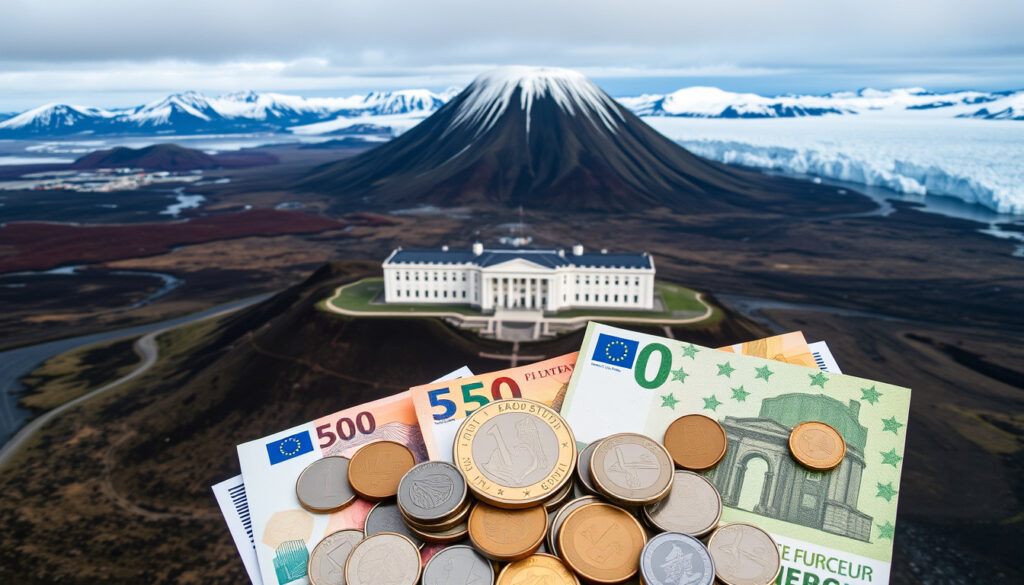
Is Iceland in the EU? Status, Currency & Future Plans
Most people assume that if a country is in Europe, it’s in the European Union. Iceland, however, has spent decades carving out a middle ground: deeply integrated with the EU through the European Economic Area and Schengen, yet never formally joining. With a public referendum on EU accession talks scheduled for August 29, 2026, that comfortable middle ground might be about to shift.
EU member status: Not a member ·
EEA member: Yes, since 1994 ·
Schengen Area member: Yes ·
Official currency: Icelandic króna (ISK) ·
NATO member: Yes ·
EU accession negotiations: Frozen since 2013; public referendum scheduled for 2026
Quick snapshot
- Not an EU member, but EEA member since 1994 (Guide to Iceland travel & culture guide)
- Schengen Area member (Guide to Iceland travel & culture guide)
- NATO member with no standing army (Government of Iceland official portal)
- Whether Iceland will resume EU accession negotiations after the 2026 referendum
- Whether public opinion will shift significantly before the vote
- Whether Iceland would adopt the euro if it joined the EU
- Referendum on resuming EU talks scheduled for August 29, 2026 (Icelandic National Electoral Commission official election authority)
- Advance voting began July 27, 2026 (Icelandic National Electoral Commission official election authority)
- If yes vote, government would restart negotiations with the EU (Icelandic National Electoral Commission official election authority)
- If no vote, status quo continues — EEA + Schengen without full membership (Icelandic National Electoral Commission official election authority)
- Any eventual membership treaty would require a second referendum (Icelandic National Electoral Commission official election authority)
The table below captures Iceland’s current standing across key dimensions, showing a country that is deeply integrated with the EU while retaining formal independence.
| Attribute | Value |
|---|---|
| EU membership | No |
| EEA membership | Yes (since 1994) |
| Schengen Area | Yes |
| Currency | Icelandic króna (ISK) |
| NATO member | Yes |
| Population | ~376,000 (2024) |
| Accession application | Submitted 2009, frozen 2013 |
| Next referendum | August 29, 2026 |
The pattern: Eight facts show Iceland is deeply integrated with the EU without being a member — a near-EU state that enjoys market access, free movement, and security cooperation while keeping control over fisheries and currency.
Is Iceland a full member of the EU?
No, Iceland is not a member of the European Union. As of 2026, the country remains outside the EU despite having applied for membership in 2009. The application was frozen in 2013 and formally withdrawn in 2015. Instead, Iceland participates in the EU’s single market through the European Economic Area (EEA) agreement travel & culture guide, which it joined in 1994. It also belongs to the Schengen Area, meaning passport-free travel with most of Europe.
What is Iceland’s relationship with the European Union?
- EEA member since 1994 — grants access to the EU single market in exchange for adopting relevant EU legislation
- Schengen Area member since 2001 — no border checks with other Schengen states
- EFTA member — European Free Trade Association, together with Norway, Switzerland, and Liechtenstein
- NATO member — provides defense guarantee via the alliance
The implication: Iceland is a de facto member of many EU frameworks without having a seat at the table in Brussels.
Icelanders enjoy the benefits of the single market and free movement — two of the EU’s biggest attractions — without surrendering control over fishing quotas, the króna, or agricultural policy. That’s the trade-off that makes full membership a harder sell.
Why are Norway and Iceland not in the EU?
Both Nordic countries have chosen EEA membership over EU membership for similar reasons: sovereignty over natural resources, especially fisheries. For Iceland, the EU’s Common Fisheries Policy is a dealbreaker. The fishing industry accounts for roughly 40% of export revenue, and Icelandic politicians fear that Brussels would dictate quotas that undermine local livelihoods.
What role does the fishing industry play in Iceland’s EU decision?
- Fisheries are the single largest obstacle to EU membership (The Guardian UK news outlet)
- Iceland’s unilateral control over its 200-nautical-mile exclusive economic zone is non-negotiable for many voters
- Norway similarly rejected EU membership in referendums in 1972 and 1994, citing fisheries and agriculture
How does Norway’s situation compare to Iceland’s?
Both countries are EEA members, both are in Schengen, both use their own currencies (Norwegian krone, Icelandic króna), and both are NATO members. Norway has held two referendums on EU membership and said no both times. Iceland has never held a binding referendum on full membership — only on whether to start negotiations. That makes the 2026 vote a first step, not a final decision.
The pattern: The Norwegian precedent shows that EEA membership can be a stable long-term arrangement. But Iceland’s smaller economy and the memory of the 2008 financial crisis make the EU’s safety net more attractive to some voters.
Why did Iceland refuse to join the EU?
Iceland didn’t exactly refuse — it applied, then froze the process. The application was driven by the 2008 financial collapse, when support for EU membership surged as a way to adopt the euro and gain stability. But as the economy recovered, so did euroskepticism.
- 2009: Iceland formally applies for EU membership (Reuters global news agency)
- 2010: Accession negotiations open
- 2013: New government freezes talks
- 2015: Application withdrawn
The main arguments against membership: loss of fisheries control, imposition of EU agricultural policy, and the requirement to adopt the euro (which would mean surrendering independent monetary policy). The Icesave dispute — a banking crisis liability — also soured public opinion.
What was the result of the 2026 referendum?
The 2026 referendum has not yet taken place (scheduled for August 29, 2026). The vote asks whether Iceland should resume accession negotiations. It is advisory, not binding, meaning the government can choose to act on the result or not.
If the referendum passes, negotiations could take years. And even then, a second referendum on actual membership would be required. The 2026 vote is the beginning of a long process, not the end.
Does Iceland use the euro?
No, Iceland uses the Icelandic króna (ISK). The euro is not legal tender, and there are no plans to adopt it without EU membership. The króna is a small, volatile currency — it lost more than half its value against the euro during the 2008 crisis. But post-2008 capital controls and a tourism boom have stabilized it, and many Icelanders are wary of giving up monetary sovereignty.
- Currency: Icelandic króna (ISK) (Guide to Iceland travel & culture guide)
- Euro adoption would require EU membership and meeting the Maastricht criteria
- Some businesses in tourist areas accept euros informally, but change is given in krónur
The catch: Iceland’s economy is already highly integrated with the eurozone. Most trade is with the EU, and the króna is often pegged to the euro in practice. Yet the symbolic value of keeping the króna — and the control it gives over interest rates — remains strong.
Can EU citizens live in Iceland?
Yes — thanks to the EEA agreement, citizens of EU member states can live, work, and study in Iceland without a visa or work permit. The same applies to citizens of Norway, Iceland, Switzerland, and Liechtenstein. Non-EEA nationals face a stricter immigration process.
- EU/EEA citizens: free movement, no permit needed (Government of Iceland official portal)
- Schengen area: visa-free travel for up to 90 days for non-EEA visitors
- Residence registration required after 3 months
The implication: This arrangement is a major reason why many Icelanders feel they already have the best of both worlds — they can travel, work, and trade freely with Europe without being bound by EU political institutions.
Who is Iceland’s biggest ally?
Iceland’s most important strategic relationship is with the United States, as a NATO ally. The U.S. operates a military base at Keflavík (though with no permanent forces), and Iceland relies on the alliance for its defense since it has no standing army.
- NATO member since 1949
- Hosts the Keflavík Air Base, a key NATO installation
- The U.S. is Iceland’s primary security partner
- Iceland also maintains close ties with other Nordic countries through the Nordic Council
The pattern: Iceland’s security is guaranteed by the world’s largest military alliance, not by the EU. That makes the EU’s security dimension less relevant for Icelandic voters.
What is the only country to leave the EU?
The United Kingdom is the only country to have ever withdrawn from the European Union (Brexit, completed in 2020). This is relevant to Iceland’s debate because the UK was a key ally within the EEA — its departure from the EU weakened Iceland’s position as an EEA partner. Some Icelandic analysts argue that Brexit makes the EU more attractive because it removes a major counterweight to the bloc’s centralizing tendencies.
- Euronews European news network reported that Brexit shifted Iceland’s calculation
- Iceland has never been an EU member, so “leaving” is not applicable
The trade-off: Brexit showed that leaving is painful, but it also showed that the EEA is a viable alternative to full membership. For Iceland, the question is whether the benefits of a seat at the table outweigh the costs of giving up fisheries and currency control.
Comparison: Iceland vs. EU Membership
The table below distills three key differences into a clear pattern: Iceland already has nearly everything the EU offers except institutional influence.
| Dimension | Iceland (current) | EU member state |
|---|---|---|
| Single market access | Yes (via EEA) | Yes |
| Free movement of people | Yes (EEA + Schengen) | Yes |
| Customs union | No (EFTA, not EU customs union) | Yes |
| Common Fisheries Policy | No — full national control | Yes — quotas set by EU |
| Currency | Icelandic króna (independent) | Euro (or opt-out like Denmark) |
| Voting power in EU institutions | None | Yes |
| NATO membership | Yes | Yes (most, not all) |
| Contribution to EU budget | EEA grants (smaller than full member fees) | Full member fees |
The catch: The choice is not between isolation and integration — Iceland is already integrated. The real choice is between influence and autonomy. Full membership gives Iceland a seat in the Council and Parliament, but requires surrendering control over fisheries and monetary policy.
Pros and Cons of Iceland Joining the EU
Upsides
- Voice in EU decision-making — a seat at the table
- Potential to adopt the euro, stabilizing the currency
- Access to EU structural funds and agricultural subsidies
- Stronger consumer and environmental protections
- Simplified trade — no customs formalities for goods
Downsides
- Loss of control over fisheries — the biggest economic concern
- Loss of independent monetary policy (króna vs euro)
- EU budget contributions — net cost estimated at 0.5% of GDP
- Adoption of EU agricultural policy, hurting small farms
- Reduced flexibility in trade negotiations (EU sets tariffs)
Timeline: Iceland and the EU
- 1994 — Iceland joins the European Economic Area (EEA)
- 2001 — Iceland joins the Schengen Area
- 2008 — Financial crisis; public support for EU membership rises
- July 2009 — Iceland formally applies for EU membership
- 2010 — EU accession negotiations open
- 2013 — New government freezes accession negotiations
- 2015 — Iceland withdraws its EU membership application
- August 29, 2026 — Public referendum on resuming EU accession negotiations (scheduled) (Icelandic National Electoral Commission official election authority)
Confirmed facts vs. What remains unclear
Confirmed facts
- Iceland is not an EU member state
- Iceland is a member of the EEA and Schengen
- Iceland uses the Icelandic króna
- Iceland is a NATO member
- Referendum is advisory, not binding (Icelandic National Electoral Commission official election authority)
- Advance voting began July 27, 2026 (Icelandic National Electoral Commission official election authority)
What remains unclear
- Whether the referendum will pass
- Whether negotiations would lead to a membership treaty
- Whether Icelanders would approve membership in a second referendum
- What concessions the EU would demand on fisheries
Key perspectives on the EU debate
“Iceland already has access to the EU single market through the EEA and passport-free travel through the Schengen Area. The question is whether the additional benefits of full membership are worth the loss of sovereignty over fisheries and currency.”
“The referendum is a first step. If Icelanders vote yes, the government will begin negotiations with the EU — but that process could take years, and a second referendum would still be required.”
“Fisheries remain the elephant in the room. Any government that signs away Iceland’s control over fishing rights would face a political backlash.”
The 2026 referendum is a crossroad for Iceland. A yes vote doesn’t mean immediate membership — it means reopening a door that was closed in 2015. For Icelanders, the calculus is clear: keep the comfortable middle ground of EEA membership with full control over fish and currency, or trade that autonomy for a seat at the EU’s table — and a potentially stronger currency. For the EU, Iceland’s choice tests whether deep integration without membership is a permanent arrangement or a stepping stone.
theepochtimes.com, island.is, en.wikipedia.org, newunionpost.eu, kas.de, brusselssignal.eu
Frequently asked questions
Is Iceland part of the European Union?
No, Iceland is not an EU member state. It is a member of the European Economic Area (EEA) and the Schengen Area.
Does Iceland use the euro?
No, Iceland uses the Icelandic króna (ISK). The euro is not legal tender there.
Can EU citizens move to Iceland without a visa?
Yes. Thanks to the EEA agreement, EU/EEA nationals can live and work in Iceland without a visa or work permit.
Why did Iceland apply for EU membership?
Iceland applied in 2009 following the financial crisis, hoping to adopt the euro and gain economic stability. The process was frozen in 2013 and withdrawn in 2015.
Is Iceland in the Schengen area?
Yes, Iceland has been a member of the Schengen Area since 2001, allowing passport-free travel with most of Europe.
When is the next Iceland EU referendum?
The next referendum is scheduled for August 29, 2026. It asks whether Iceland should resume EU accession negotiations.
What is the EEA agreement?
The European Economic Area (EEA) agreement allows Iceland, Norway, and Liechtenstein to participate in the EU single market without being full EU members.
More related posts
 How Many Weeks Between Two Dates? Calculator & Guide
 13 Best Things to Do in Malahide: Castle, Beach & More
 John Magnier Barne Estate: High Court Rejects Handshake Deal
 Ireland vs Hungary Tickets – Availability and Buying Guide
 Real Madrid vs Rayo Vallecano Standings: H2H Stats & Results
 House of Guinness Cast Guide: True Story, Actors, Season 2
 Old Money Style Men: Wardrobe Guide, 3-3-3 Rule & Brands
 Justin Timberlake Malahide Castle: Support, Times, Transport
